You know that moment when a guest is finally at checkout? They’ve picked the date, the time, the tickets, and they’re one step away from paying. You’d think the hard part is done.
It is, mostly. However, the checkout is an opportunity. A lot of operators either make a bit more per booking or leave it on the table without realising it at this stage.
The tricky bit is that checkout is fragile. If you overload it, you can lose the booking. If you ignore it, you miss easy add-ons that guests genuinely want.
Why checkout upsells are worth caring about
A lot of tour businesses still rely on staff to do the “anything else?” moment. And in real life, that’s messy.
- The queue is long, so the team rush.
- The guest is distracted and just wants the tickets.
- The staff member forgets, or feels awkward asking.
- The add-on exists, but it’s not visible at the right time.
So you end up with the same outcome: extras sell, but only sometimes, and usually less than they should.
Did you know: checkout is where most people drop off
This is why the “how” matters as much as the “what”.
Baymard’s long-running research puts average online cart abandonment at around 70%. In other words, most people who start checkout do not finish.
They also highlight that people abandon when checkout takes too long or is too complicated. There are all kinds of methods to minimise cart abandonment, with simplification being a core method.
So if you’re going to add cross-sells, the goal is not “add more stuff”. The goal is “make it easy to say yes to one helpful extra”.
What makes a good checkout cross-sell in tours and attractions
The best add-ons tend to fit one of these buckets:
1) Convenience
Something that makes the day easier.
Examples: hotel pickup, open return, flexible upgrade, skip-the-line add-on.
2) Comfort
Something that reduces stress or discomfort.
Examples: reserved seat, weather poncho, small group upgrade, luggage storage.
3) Better experience
Something that improves the core product without changing the whole plan.
Examples: audio guide, tasting pack, VIP viewing area, photo package.
4) Peace of mind
Something that protects against the very normal reality of travel changing.
Examples: flexible ticket option, cancellation upgrade (where appropriate).
If the add-on doesn’t clearly fit one of those, it usually performs badly, or just annoys people.
A few tour and attraction examples that actually make sense
Hop-on hop-off
A guest buys a 24-hour ticket because it feels safe and simple. At checkout, you offer:
- Upgrade to 48 hours (with a clear benefit like “see more, slower pace”)
- Add an audio guide (especially if you have multilingual content)
- Add a family bundle if they’re buying multiple adult tickets
The key is that these upgrades match how people use the product. They’re already thinking, “Will I get enough value in one day?”
Walking tours
Someone books a food tour. Two sensible add-ons might be:
- Drinks pairing (because it completes the experience)
- Small group upgrade (because some guests hate big groups but won’t ask)

You’re not inventing new products. You’re packaging what you already know guests ask for.
Museums and attractions
Someone books a standard entry. Checkout add-ons that tend to work:
- Audio guide
- Donation (if your audience is receptive)
- “Upgrade to flexible entry time” if you have timed slots and late arrivals are common
This is also where clarity matters most. If the guest is worried about being scammed, vague add-ons do not help. Make it specific, with one sentence on what they get.
Ferries and transport-style products
Someone books a crossing or a day ticket. Add-ons might include:
- Cabin or reserved seating
- Open return
- Priority boarding (only if it’s real and operationally supported)
In transport, “comfort” and “certainty” usually beat novelty.
Simple rules that stop cross-sells from feeling annoying
Keep it to one to three options.
If it looks like a menu, people freeze. Analysis paralysis is a real thing, and if you offer people too many options, they might end up just cancelling the entire booking to put it off until later. which may end up being never.
Make it contextual.
Offer add-ons based on what they’re booking, not a generic list of everything you sell.
Make it a one-click yes.
The moment you add extra steps, you risk losing the booking. Baymard’s work is blunt on this: complexity kills conversions.
Be honest about what it is.
No vague “enhance your experience” language. Say what it is, who it’s for, and what it costs.
Where Palisis fits, without making this an advert
This is exactly why we built cross-sell in the Palisis checkout.
Not so you can throw random extras at people, but so you can surface the right add-on at the right moment, without staff needing to remember, and without turning checkout into a circus.
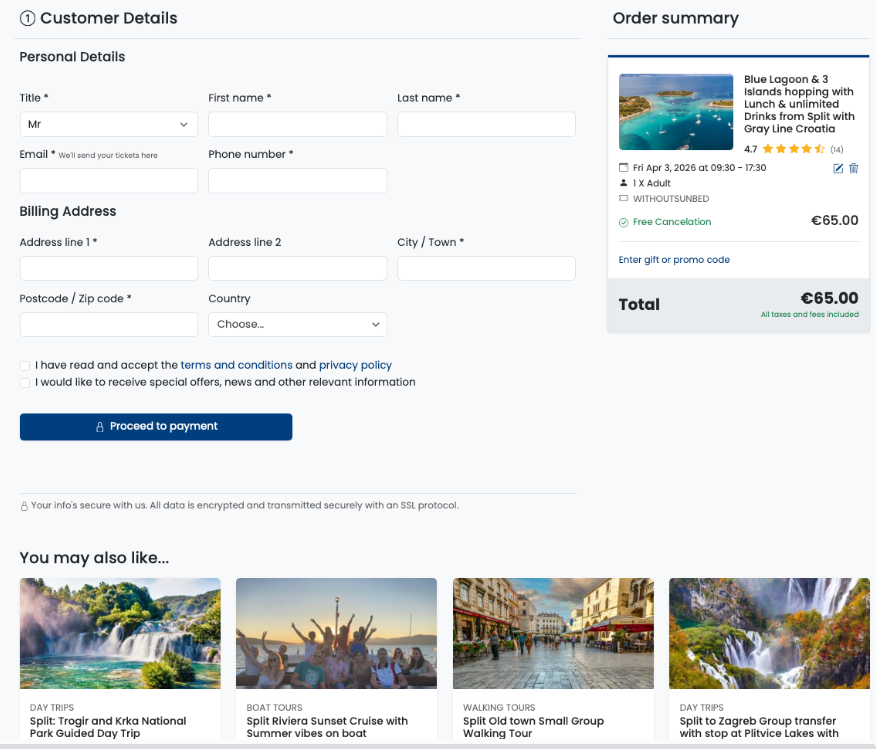
You can set up cross-sells so they’re:
- Relevant to the product being booked
- Easy to add in one click
- Consistent across channels where the checkout is used
If you want it switched on or want help choosing which add-ons to test first, that’s a quick conversation with the team. A comprehensive system that includes add-ons is more important than you might think, because yes, even that umbrella your customer bought should be in your system too.
A final “did you know” for travel behaviour
If you need a travel-flavoured stat to support the “people change their minds” point (useful when talking about flexible upgrades), Think with Google reports that 8% of travellers surveyed cancel and re-book after completing a booking.
That doesn’t mean “be overly flexible”. It just means change is normal in travel, and your checkout can support that reality in a sensible way.
Ready to get started to boost your add-ons, packages, and bookings with cross-sell in checkout? Talk to us about how we can increase the value of your customers.