Years ago, while travelling through Italy, I began to notice the difference between places that welcomed tourism and places that appeared to exist almost entirely for it.
Our road trip took us through major cities, coastal villages and smaller towns. In many places, the visitor experience sat alongside ordinary life. There were local markets, neighbourhood cafés and residential streets. Menus were not always translated into English. People were shopping, commuting and going about their day.
Even in heavily visited destinations such as Florence and Lake Como, it was still possible to see the life of the place around the tourism. The streets visitors occupied were also streets where people appeared to live.
Venice felt different.
It did not strike me immediately. Then, on our second day, I walked past an old hardware shop and stopped.
There was dust in the window. The display looked as though it had barely changed in years. It was completely unremarkable, but that was precisely why it stood out. It was the first shop I had seen that appeared to exist primarily for local people.
Everything else seemed designed for visitors.
Recently, I came across a series of maps showing the routes taken by tourists and residents in several major cities. The difference was striking.
heat map photos by Erica Fischer
- Blue – City residents
- Red – Tourists
- Yellow – undefined
The city visitors expect to see
Tourists rarely arrive at a destination without an existing idea of what it looks like.
Before someone visits Edinburgh, they may already picture the castle, the Royal Mile, Victoria Street and Arthur’s Seat. San Francisco means the Golden Gate Bridge, cable cars and Fisherman’s Wharf. Paris means the Eiffel Tower and the Seine. Venice means gondolas, canals and St Mark’s Square.
These images are built over decades through films, television, advertising, guidebooks, photography and, increasingly, social media.
By the time a visitor arrives, they are not simply discovering the destination. They are looking for the version of it they already recognise.
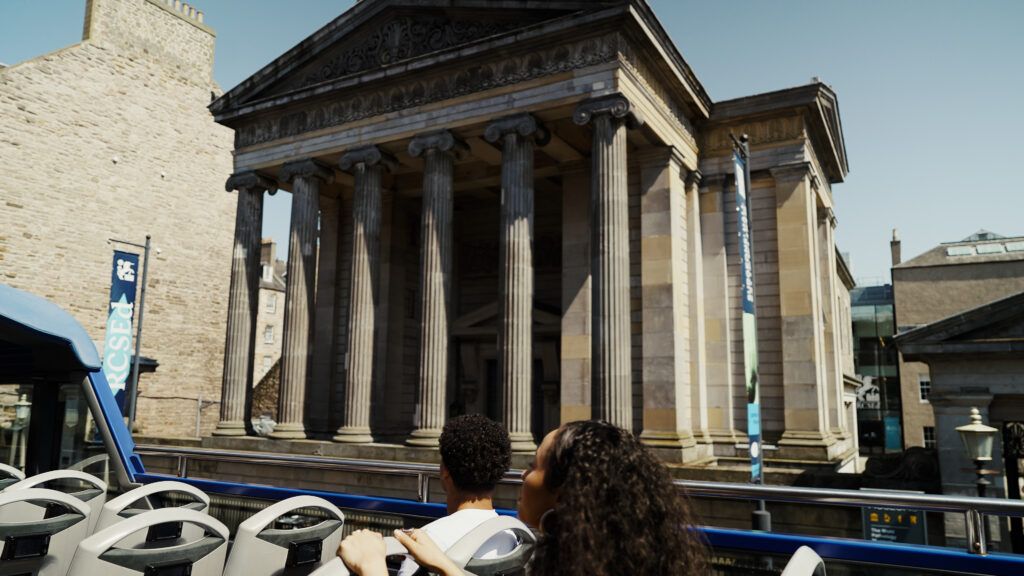
Seeing the major landmarks provides reassurance. It confirms that they have truly been there. It also gives them the photographs and stories they expect to take home.
This is not inherently a problem. Famous landmarks are famous for a reason. People should not feel guilty for wanting to see them.
Why tourists follow the same routes
It is tempting to tell visitors to avoid the obvious places, leave the guidebook behind and explore like a local.
In reality, that advice ignores many of the practical reasons people stay within established tourist areas.
A visitor may have only one or two days in the city. They may not speak the language or understand the transport system. They may feel safer in busy areas where signs, menus and services are designed for them.
They may be travelling with young children or older relatives. They may have a disability or limited mobility. They may need reliable information about toilets, seating, hills, walking distances and accessible transport.
Some people are comfortable wandering without a clear plan. Many are not.
I experienced this myself in San Francisco. During my first few days, I joined organised tours and visited the city’s most recognisable places. Only later, once I felt more familiar with the city, did I begin walking further and seeing neighbourhoods beyond the main visitor routes.
Tourist concentration is not simply caused by a lack of curiosity. It is also shaped by time, confidence, accessibility and infrastructure.
When the tourist map becomes the city
Visitor movement has both physical and economic impacts.
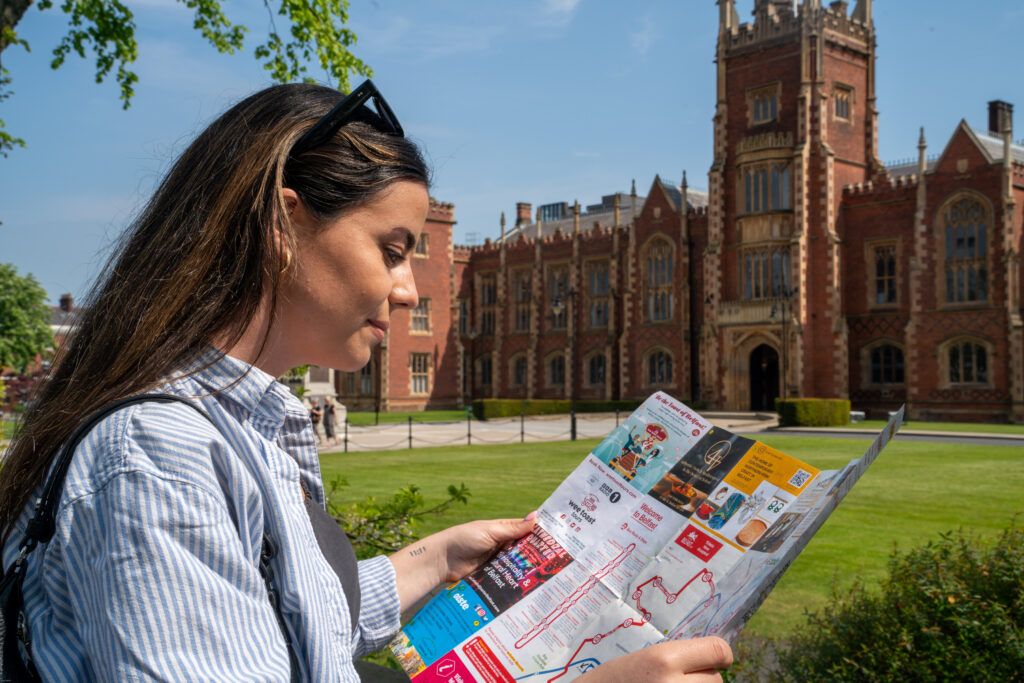
When large numbers of people follow the same routes, businesses adapt to serve them. Restaurants change their menus. Shops change what they sell. Property becomes more valuable as visitor accommodation. Public transport, signs, and services are increasingly concentrated in the same central areas.
Over time, the image tourists arrive expecting can become stronger than the place that originally created it.
A historic district may still look authentic, but its everyday purpose begins to change. A bakery becomes a souvenir shop. A home becomes a short-term rental. A local café becomes a themed experience designed to match what visitors imagine the destination should be.
This can create a strange cycle.
Visitors arrive looking for the postcard. Businesses respond by giving them more of it. The postcard becomes even more dominant, encouraging the next group of visitors to follow exactly the same route.
Tourism becomes concentrated not only because certain places are beautiful or important, but because everything around the visitor experience repeatedly tells people that these are the places that matter.
Tours help draw the visitor map
Many customers actively want a highlights tour. They want the top ten landmarks, the best viewpoints and the places they have seen online. For someone with limited time, a well-designed tour is often the most practical way to experience them.
Operators do not need to remove famous sights from their itineraries. Nor should they take visitors into residential neighbourhoods simply to appear more authentic.
But there is a difference between showing people the highlights and allowing those highlights to become the entire story.
A tour can confirm what someone already knows about a city while also introducing them to something they would never have found on their own.
That could be a quieter street between two major stops. It could be a small independent business, an overlooked piece of architecture or a story about the people who live and work behind the landmark.
Give visitors the landmarks, then add something unexpected
People are more likely to book an experience when they understand what it includes.
A tour promoted entirely around unknown neighbourhoods may struggle to attract someone making their first visit. A tour containing Edinburgh Castle, the Royal Mile and several hidden stories along the way feels easier to trust.
Operators can use familiar landmarks as anchors, then broaden the experience around them.
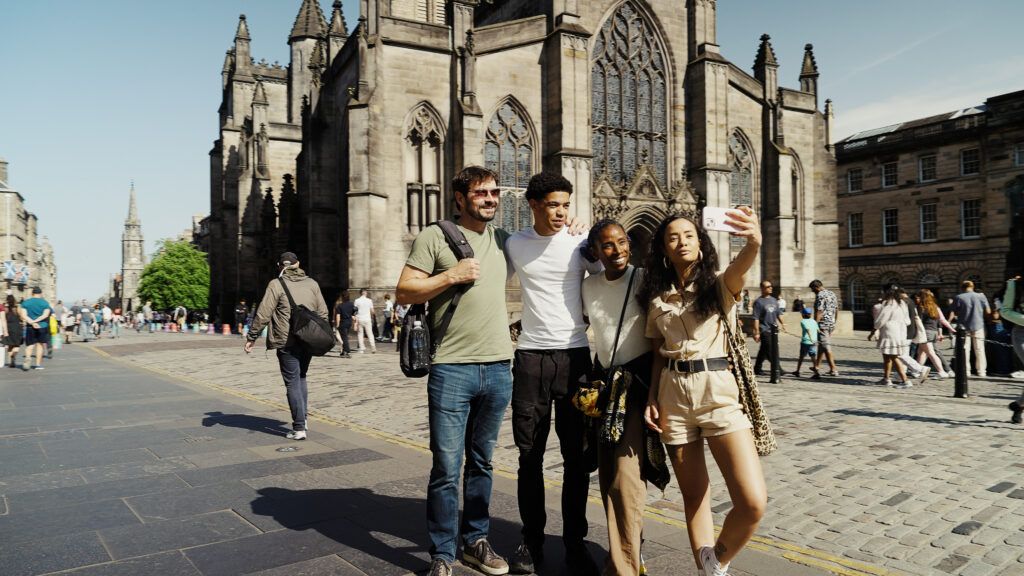
A city highlights tour might include a lesser-known viewpoint. A food tour might explain how the local dining scene differs outside the visitor centre. A hop-on hop-off route might introduce passengers to stops that connect them with a different neighbourhood, park or independent attraction.
The promise is not that visitors will avoid everything popular. It is that they will leave understanding more than they expected.
Tell the story beyond the photograph
Who lives in the area now? What businesses used to operate here? How does the neighbourhood change outside the summer season? Where do the people working in the tourist centre travel from each day? What has become easier or harder for local residents as visitor numbers have grown?
In Venice, learning more about the relationship between the historic centre and Mestre would have changed the way I understood both places.
Mestre is not simply somewhere tourists stay to save money. It is part of the living infrastructure that supports Venice. Many of the workers who keep the visitor economy running travel into the historic centre from the mainland.
That context turns a simple train journey into part of the destination’s story.
Make exploration possible for more people
Encouraging visitors to leave the busiest areas only works when doing so is practical.
Tour operators can make less familiar parts of a destination accessible to people who would not feel comfortable reaching them independently.
That might mean offering transport-linked neighbourhood tours, shorter walking routes or clear accessibility information. It could involve building itineraries around seating, toilets and reliable collection points.
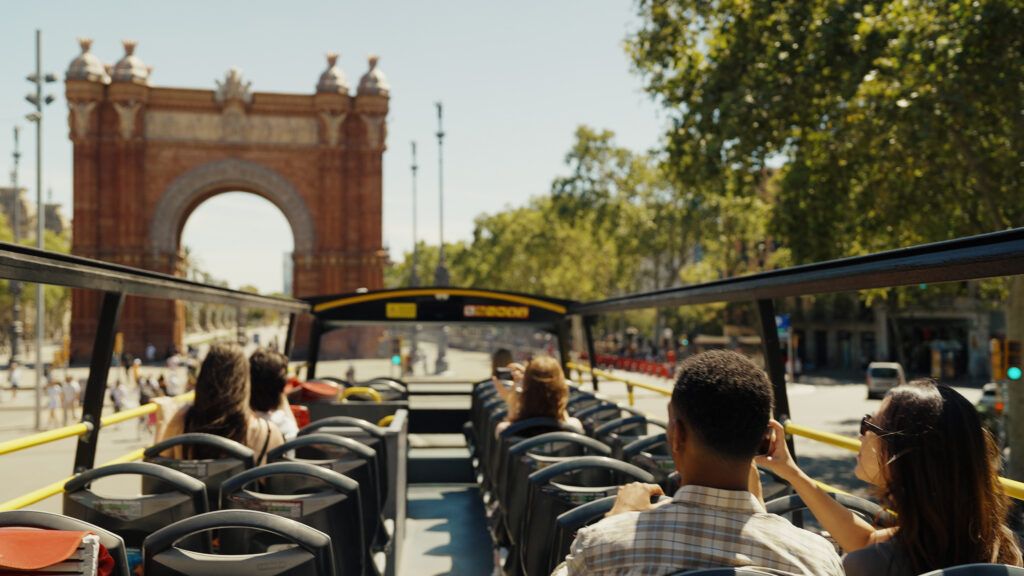
A visitor with limited mobility should not have to choose between the most crowded landmarks and missing the destination altogether.
Operators can also provide more honest descriptions of their experiences. “Easy walking” can mean very different things depending on the surface, gradient, distance and availability of rest stops.
Good information gives people the confidence to choose something beyond the most predictable route.
Work with neighbourhoods, not simply in them
Dispersing visitors is not automatically responsible.
A quiet street is not an unused tourism asset. A small neighbourhood may not want coachloads of visitors arriving each morning. A local café may be delighted to welcome a group of eight, but unable to manage forty people at once.
Before adding a new location, operators need to consider who benefits and who carries the cost.
Could the route support independent businesses? Can local guides be involved? Are group sizes appropriate? Does the area have the facilities visitors need? Will residents lose access to pavements, parking or public space?
The goal should not be to turn every “hidden gem” into the next heavily photographed hotspot.
It should be to create experiences that spread understanding and economic value without simply spreading disruption.
The best tours change how people see a place
Most tourists will continue to want the icons.
They will want to see Edinburgh Castle, cross the Golden Gate Bridge and stand beside the canals of Venice. These places are part of the reason they booked the journey.
Tour operators do not need to persuade visitors that the landmarks are unimportant.
A good tour helps them leave having understood the place behind it.
Want to learn more about what products do best, or how to distribute your tours to a wider audience? Contact us now for a chat.