If your booking setup treats a dinner show the same way it treats a restaurant booking, that is a bit like using a coat hook as a wardrobe. Technically, yes. Emotionally, no.
It is a timed, ticketed experience where food, tables, showtimes, packages, and guest expectations all have to behave themselves at the same time. Which, as anyone in operations knows, is already an ambitious ask.
That is why dinner shows need different booking logic.
A restaurant booking and a dinner show booking are not the same thing
A restaurant mostly manages covers, tables, and service flow.
A dinner show is managing all of that, plus:
- A fixed start time
- A live performance
- Different seating areas or ticket types
- Packages and inclusions
- Guests who absolutely do care where they are sitting
- A room where one delay can annoy far more than one table
In a normal restaurant, if a table arrives ten minutes late, it is irritating.
In a dinner show, if a group arrives late, cannot find their booking, and then starts discussing whether they really paid for premium while the first act is trying to begin, it becomes a group project.
Dinner shows sell evenings, not just tables
This is the biggest difference.
A restaurant booking is usually about securing a place to eat.
A dinner show booking is about buying a whole evening with a built-in sense of occasion. Guests are not just asking, “Can we get a table?” They are asking, “Is this the nice table? Is this the package with drinks? Will we be near the stage? Will my mum think I’ve booked something impressive?”
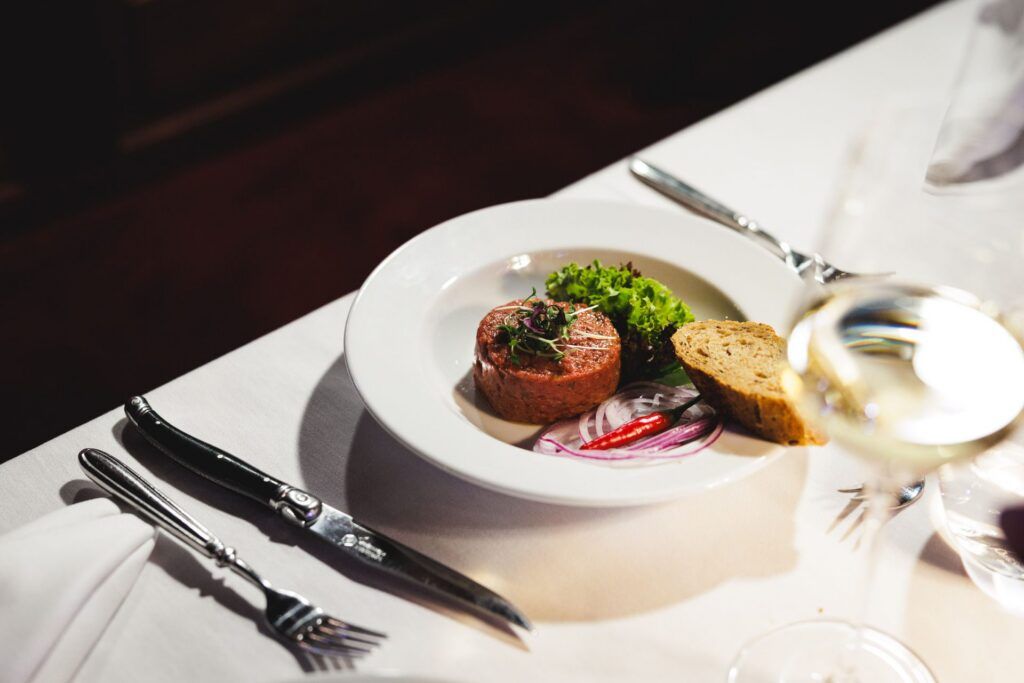
That might mean:
- A standard table
- A premium table
- Better sightlines
- A drinks package
- A celebration upgrade
- A VIP area
- A seating zone that works better for groups
Table management gets more complicated fast
Restaurants already have enough going on when it comes to table planning.
Dinner shows add another layer of nonsense.
Now you are not just asking:
- How many covers do we have?
- Which table can seat four?
You are also asking:
- Which tables have the best view?
- Which ones belong to premium packages?
- Which bookings include extras?
- Which groups need to stay together?
- How do we fill the room sensibly without making the layout feel like punishment?
Timing matters much more
Restaurants can stagger service.
Dinner shows usually cannot. Or at least not without consequences.
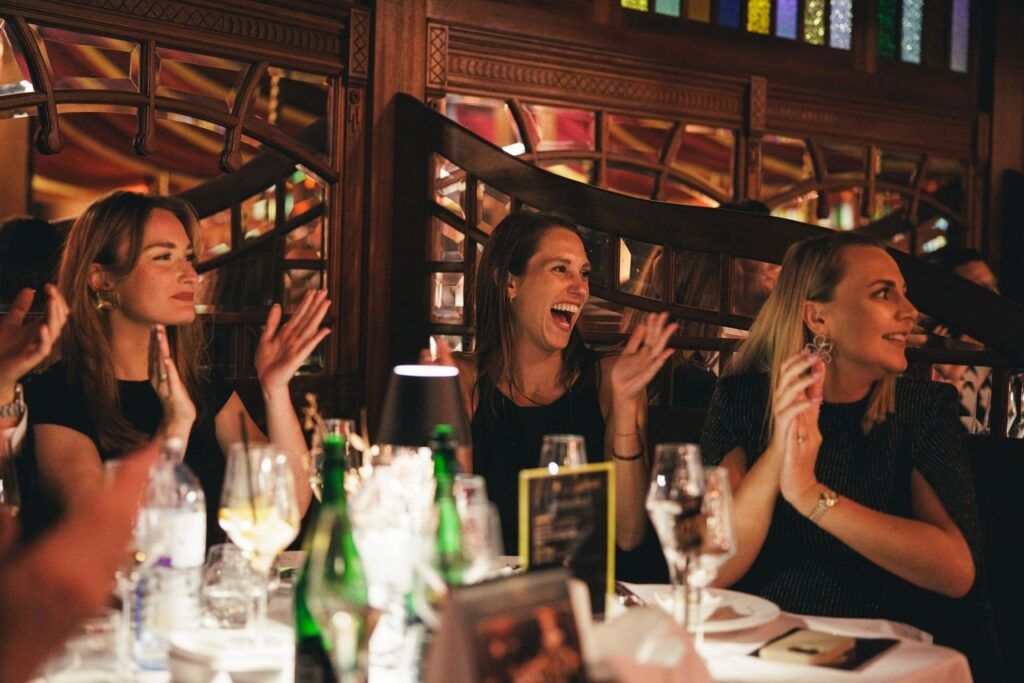
There is often a shared rhythm to the evening:
- Arrival window
- Seating
- Food service
- Performance start
- Interval, if there is one
- Post-show exit
That means your booking setup needs to support:
- Clear arrival times
- Fixed performance times
- Real capacity per sitting
- Better guest communication before arrival
- Fewer surprises on the night
A dinner show cannot really run on the logic of “pop in whenever and we’ll sort something out”.
Well, it can. But it will have the atmosphere of an airport gate during a cancellation.
Packages are part of the product
This is another big difference.
Restaurants may offer upsells. A bottle of wine. A nicer steak. Something with truffle on it because apparently that helps.
Dinner shows often build packages into the experience itself.
That could mean:
- Standard dinner and show
- Premium seating with drinks
- VIP package with the best table
- Celebration package
- Seasonal or special-event variations
So the booking logic needs to handle more than headcount. It needs to manage what each guest has actually bought.
That includes:
- What is included in each package
- Which tables or zones connect to which package
- How pricing differs
- What the guest should expect on arrival
Guests care much more about where they sit
In a normal restaurant, people might prefer a nicer table, but many will shrug and get on with it.
In a dinner show, table position affects the actual experience. It is not just about ambience. It is about the view, atmosphere, and whether the premium ticket feels remotely premium.
People care about:
- Whether they can see properly
- Whether they are close to the stage
- Whether their group is together
- Whether they paid more for a reason
- Whether the “best seats” are actually, well, better
That is why dinner shows often need booking logic built around:
- Table areas or seating zones
- Reserved seating
- Package-linked positioning
- Group allocation rules
- Clear differences between standard and premium
This is also where why seat selection is becoming more important for tourist experiences fits naturally, because dinner shows are one of the clearest examples of that shift.
Group bookings go feral quite quickly
Dinner shows are often social bookings.
Families, birthday groups, coach parties, city-break friends, couples celebrating something, and work groups pretending this is not technically team bonding.
That means the booking system has to cope with people wanting:
- To sit together
- To upgrade together
- To add extras
- To book in one go
- To know what they are getting before they arrive
If the setup is too basic, group bookings stop being a process and become a series of apologetic notes and improvised fixes.
Nobody wants their special evening to begin with, “We’ve split you across two tables, but at least you can wave.”
Distribution makes it even less like a restaurant
Many dinner shows are not only sold direct.
They may also be sold through:
- Hotels and concierges
- Resellers
- Tour operators
- OTAs
- Partners selling evening experiences to tourists
At that point, you are not just managing tables. You are managing:
- Live availability
- Package consistency
- Guest expectations set elsewhere
- Booking information from multiple sources
- A greater need for clear ticketing and product rules
A restaurant booking system is not usually built for that level of complexity. If you are working through that side too, the booking system checklist for seated attractions and dinner shows is a useful companion piece.
The booking journey needs to do more of the selling
A standard restaurant booking flow can be very simple.
Pick a date. Pick a time. Pick the party size. Done.
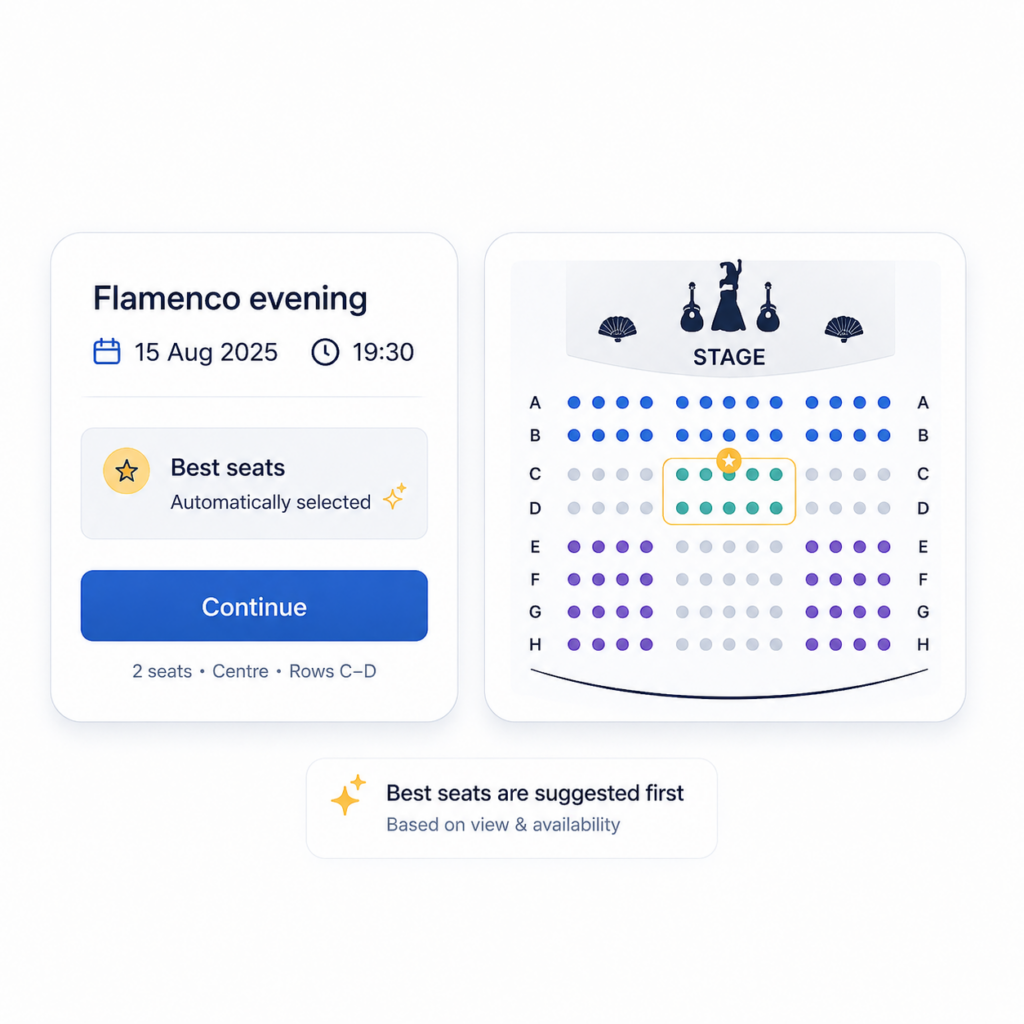
A dinner show usually needs to do more work.
It needs to explain:
- What the guest is booking
- What is included
- What the difference is between packages
- Whether seating is standard, premium, or VIP
- When guests need to arrive
- How the evening works
Because the guest is not just deciding whether they want dinner. They are deciding whether this is worth one of their holiday evenings, and those are surprisingly high-stakes little decisions.
So, what does different booking logic actually mean?
For dinner shows, it usually means having a setup that can handle:
- Fixed performance times rather than loose reservation windows
- Ticket types and packages, rather than a simple table, hold
- Seating zones or table logic tied to value
- Capacity control by performance, area, or package
- Clear guest communication before arrival
- Support for groups, upgrades, and reseller sales
- A joined-up view for front-of-house, so the team knows what has actually been sold
In other words, the system needs to understand that this is an experiential product with hospitality built in, not just a restaurant booking wearing a slightly sparkly jacket.
Continue…
Dinner shows are their own strange and wonderful category. If you are building out your setup for seated experiences, it is also worth reading our guide to the booking system checklist for seated attractions and dinner shows and our article on why seat selection is becoming more important for tourist experiences.
And if you want to talk through how Palisis can support seat maps, showtimes, distribution, and smoother booking journeys for seated venues, contact us.