There’s a moment every tour operator reaches where they think:
“We should probably give the guides access to the system.”
And then immediately think:
“Absolutely not.”
Data is precious in the digital era, and access usually means everything. Prices. Customer data, financials, and buttons that absolutely should not be clicked five minutes before a departure.
So instead, most operators choose the unofficial third option.
Screenshots.
PDFs.
WhatsApp messages sent far too late at night.
It works. Right up until peak season reminds you why it doesn’t.
Here’s the bit most people don’t realise
According to Skift, internal operational issues, not lack of demand, are one of the biggest constraints on growth for tours and activities businesses.
Skift has consistently highlighted that scaling experiences create operational strain long before demand runs out, particularly around staffing, coordination, and communication.
In other words, the problem usually isn’t selling the tour.
With the right ticketing system, everything’s running smoothly, day-after-day.
And the people delivering the experience on the ground often have the least reliable access to information.
And it starts to become clear that the issue isn’t with staff, its with the level of access available to your team.
The myth of “full access or no access”
Most operators think they’re choosing between two extremes.
- Give staff full system access and spend your life worrying about what they can see or change.
- Or lock everything down and become the human information desk for every guide and driver.
Of course, neither of these is a proper or full solution, and introduces a catalogue of operational issues that make it hard to run your business, let alone scale it.
So teams build workarounds instead of solutions. Group chats. Printed manifests. Messages that start with “sorry to bother you”.
What’s interesting is that other parts of the travel industry solved this years ago.
- Airlines give crew access to rosters and flight details, not pricing engines.
- Cruise operators provide operational views for staff, not booking controls.
- Large attractions separate operational access from commercial access by default.
This approach is widely referenced in airline and aviation operations guidance, including material from the International Air Transport Association (IATA) on crew management and operational safety.
Not because staff can’t be trusted, but because clarity reduces mistakes. It simply makes things run more smoothly.
What guides and drivers actually need (and don’t)
Here’s the useful bit you can steal for later.
Guides and drivers don’t want your system, they just want answers to help them do their job.
After all, I assure you that they aren’t ecstatic to come to you for the fifth time this week to ask about their departures.
They need to know:
- Which departures they are assigned to
- When and where they need to be
- How many guests to expect
- Enough context to do their job properly
They do not need:
- Customer payment details
- Prices or margins
- The ability to edit bookings
- Access to anything unrelated to their day
When access is limited to exactly this, behaviour changes. Fewer questions. Fewer assumptions. Fewer last-minute surprises.
A travel stat worth remembering
Its hard to build your business, and that isn’t just because of revenue issues. Operational inefficiency grows faster than revenue as tourism businesses scale.
In simple terms, doubling bookings more than doubles coordination effort.
That’s why communication pain spikes in peak season. Not because teams get worse, but because informal systems stop coping. Your best tour guide or driver should be out doing the tour, not juggling around with messaging apps.
Limited, role-based access doesn’t just protect your system. It slows that curve down. It can even save you serious embarrassment, after all, it takes only one logistical nightmare to collapse your entire working schedule.
The last thing you want is a late tour to cascade into an entire day of late tours.
A very familiar evening
It’s the night before a busy day.
- A guide asks how many guests are booked.
- A driver wants to confirm the start time.
- Someone else heard there was a change, but isn’t sure.
None of these are big questions. But they all arrive when you’re tired, distracted, and least likely to enjoy answering them.
Now imagine those same people can log in, see only their assigned departures, and get the answers themselves.
Same operation. Much quieter evening.
How Palisis approaches this
This is exactly the problem we’ve started addressing in Palisis with our resource management solution.
You can:
- Assign guides and drivers directly to departures
- Give them a limited back office login
- Let them see only their own assigned schedule
- Keep everything else locked down
No screenshots. No accidental edits. No late-night clarifications. Just a tidy interface with perfect access to keep your tours running smoothly.
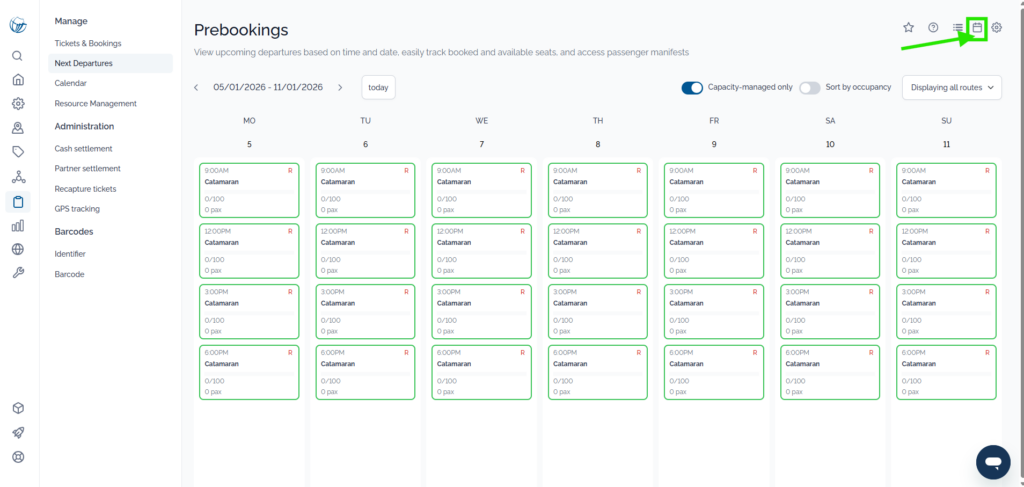
This system provides the best of both worlds, as with limited Back Office login capacity, you can protect your data whilst providing the perfect level of functionality to your drivers, guides, and other resources, with added oversight so you can keep up to date with everything.
If you’re already a Palisis customer, our Help Centre guide shows exactly how this works and what staff see when they log in:
👉 Read the guide in the Help Centre
If you’re not using Palisis yet, or you’re wondering whether this would help your operation, our sales team is happy to talk it through.
👉 Talk to our sales team