Every HOHO operator has a version of this mystery.
Someone buys a ticket. The transaction goes through. Everyone is happy.
Then… nothing.
No scan. No first hop. No joyful tourist on the top deck taking 47 photos of the same building. Just a ticket that sits there, unused, like a gym membership in February.
In our 2025 state of HOHO data, 6% of tickets go unused. That might not sound dramatic, but it’s one of those numbers that tells you a lot about the guest journey.
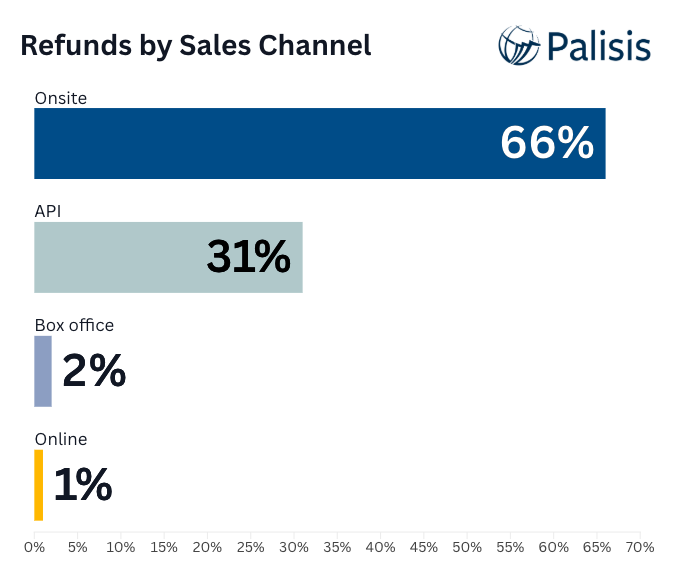
Because unused tickets are rarely about “people changing their minds”.
What does “unused” usually mean?
In HOHO terms, an unused ticket is typically a ticket that was sold but never scanned or validated.
That matters because it’s not the same as:
- A no-show for a timed slot (HOHO is flexible)
- A refund (this is a separate bucket)
- A ride that happened but did not get scanned properly (this is an operational issue)
So if you see unused tickets rising, don’t just treat it as “ah well, free money”. It’s often a warning sign that something in your buying and boarding experience is unclear.
Why unused tickets are a bigger deal than they look
1) Unused tickets create refunds later
When someone doesn’t use the ticket, they often ask for a refund afterwards. Especially through OTAs, where requesting a refund can feel as easy as pressing a button.
So unused tickets can quietly feed refund volume and support workload.
2) Unused tickets can signal lost upsell opportunities
If the guest never boards, they never see:
- Your route map and attraction partners
- Your staff recommendations
- Your upgrades, multi-day extensions, or add-ons
That’s not just a missed ride, it’s a missed chance to turn a good day into a great day.
3) Unused tickets tell you where people are getting stuck
This is the useful bit.
Unused tickets can point to:
- Confusing start stops
- Weak post-purchase instructions
- Guests buying “just in case”, then freezing when it’s time to act
- Partners selling without properly explaining how it works
In other words, it’s feedback. Just delivered in the most passive-aggressive way possible.
The most common reasons HOHO tickets go unused
These are the patterns we see most often in real life, even if guests don’t always say it out loud.
“I bought it, but I wasn’t sure where to start”
If your start stop is not obvious, solo travellers and couples will hesitate more than groups.
This is even more common when:
- The stop name is different on the website vs on street signage
- The “main stop” moved
- The map is buried in a PDF
- Staff are not visible at the stop during peak times
“I thought it started at purchase, so I didn’t want to waste it”
This one is huge, and it’s avoidable.
If someone thinks the 24-hour clock starts the moment they pay, they might delay using it to “save it for later”, then forget, change plans, or run out of day.
“We got distracted”
It sounds silly, but it’s real.

A museum queue. A long lunch. A sudden downpour. A kid meltdown. A cruise delay. A street festival. A better idea.
HOHO competes with the city itself, and the city is excellent at stealing attention.
“I bought through an OTA, and the instructions were vague”
If the voucher says “redeem at meeting point”, but there are ten stops, and nobody knows which one is the meeting point, you’ve basically created a scavenger hunt.
Some guests love that. Most do not.
“I couldn’t get the ticket open at the stop”
This happens more than anyone wants to admit:
- Low battery
- No signal
- Ticket stuck in an email thread from three days ago
- The QR is tiny, and the sun is doing what the sun does
Guests rarely say “your process failed”. They say “it didn’t work”, then they leave. Which is why seamless point-of-sale solutions and ticket validation are crucial to success.
What unused tickets tell you about your guest journey
Unused tickets are usually a sign that one of these three things is missing:
1) Confidence
The guest is not sure they are doing the right thing.
2) Clarity
The guest does not understand how validity works, where to begin, or what to do next.
3) Momentum
The guest bought, but nothing immediately nudged them towards the first hop.
Practical fixes that reduce unused tickets
1) Make “start here” impossible to miss
Every route has a busiest stop. Make that your default start point and label it clearly, everywhere.
On your website and confirmation messages, use:
- “Start here: [stop name]”
- “Closest stop to you: [link to map]”
- “Tickets start when you first hop on”
If you want one small upgrade that makes a big difference, it’s a live map link that opens in Google Maps or Apple Maps, not a static image.
2) Repeat the validity rule like you mean it
Guests do not read once. They skim three times.
Put the validity rule in three places:
- At checkout
- In the confirmation message
- On the ticket itself
Keep it simple:
“Valid for 24 hours from first scan.”
That one sentence prevents a surprising amount of indecision.
3) Add a post-purchase nudge that gets them moving
The easiest way to reduce unused tickets is to build momentum right after purchase.
A good message looks like this:
- “You’re good to go. Your ticket starts when you first hop on.”
- “Start at: [stop name]”
- “Tap for directions: [map link]”
- “Need help? [support number or WhatsApp]”
This is especially useful for OTA and API sales, where the guest feels less connected to you.
4) Fix the “ticket on a phone in the real world” problem
This is not a design debate. It’s a street reality.
Make sure:
- The QR is large enough
- The ticket loads fast on mobile
- The confirmation email has the ticket link at the top
- Staff can help quickly when the guest is struggling
If you have scanners, make the success beep obvious. People love an obvious beep. It’s reassurance.
5) Treat unused tickets as a channel quality signal
Track unused rate by channel.
If unused tickets are higher via one partner, it often means:
- The product page is unclear
- The instructions are wrong
- The start point is confusing
- The wrong expectations are being set
That’s not a reason to panic. It’s a reason to improve the partner set-up.
There’s a lot to learn from the unused ticket, and some of those learnings can be less-than-obvious but if you need help cutting through the noise and boost your guest experience – come chat with our Palisis team! We can help set the ship or bus right.