Hop-on hop-off and guided bus tours have traditionally been sold as flexible, fairly simple products. You book, you turn up, you climb aboard, and you aim for the seat you actually want before somebody else gets there first. That has worked for years.
But as operators look for clearer premium upgrades, better ways to serve groups, and more opportunities to increase revenue without changing the tour itself, reserved seating starts to feel less odd than it first sounds.
Not for every product. Not for every route. But for the right type of tour, it could make real sense.
For standard hop-on hop-off, open seating still works
It is worth saying this upfront, because not every article needs to pretend the future has arrived five minutes ago.
For a classic city hop-on hop-off service, open seating usually makes sense. Guests are getting on and off at different stops. They are choosing between the upper and lower decks. They are moving around. They often book for convenience rather than obsess over the exact seat.
Trying to apply rigid seat selection to that kind of product could make it more complicated than it needs to be.
And no operator wants to create an airline-style boarding mood on a sightseeing bus.
So for a high-volume, flexible product, open seating still does the job perfectly well.
Where reserved seating starts to look more interesting
The idea becomes more relevant when the product is less flexible and more premium.
That might include:
- Guided bus tours with fixed departures
- Long-duration sightseeing tours
- Day trips by coach
- Premium panoramic bus experiences
- Night tours with a more curated format
- Small-group or luxury bus tours
- Products where the front row or upper deck is clearly more desirable
In those cases, the seat is not just a practical detail. It can affect the quality of the experience.
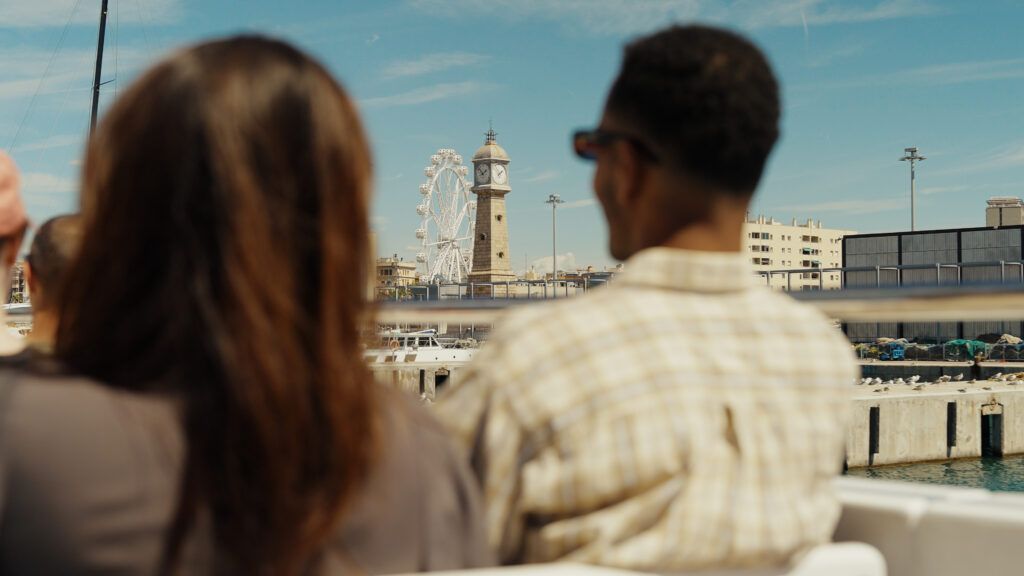
A guaranteed front-row seat on a panoramic tour is not the same as being halfway back behind someone wearing a backpack the size of a Labrador. A family sitting together on a guided day tour is not the same as being scattered around the vehicle. A couple booking a premium evening tour may care quite a lot about getting the best view.
That is where seat selection starts to move from unnecessary complication to useful product difference.
Some seats already have more value than others
This is really the heart of it.
Even if operators are not currently selling seats differently, guests often value them differently anyway.
On sightseeing buses, people commonly prefer:
- Front-row seats
- Upper-deck seats
- Window seats
- Seats together for families or groups
- Seats further from noisy groups or access points
- Seats with the clearest panoramic view
So the question is not really whether all seats are equal.
It is whether operators want to keep pretending they are.
If certain seats are consistently more popular, there is a case for turning that preference into a clearer ticket option or premium upgrade.
It could create a new kind of upsell
One of the more interesting parts of reserved seating is the revenue angle.
Operators are often looking for ways to increase average order value without changing the core tour. That is exactly why premium seating is interesting in other seated experiences, and the same logic could apply here for the right products.
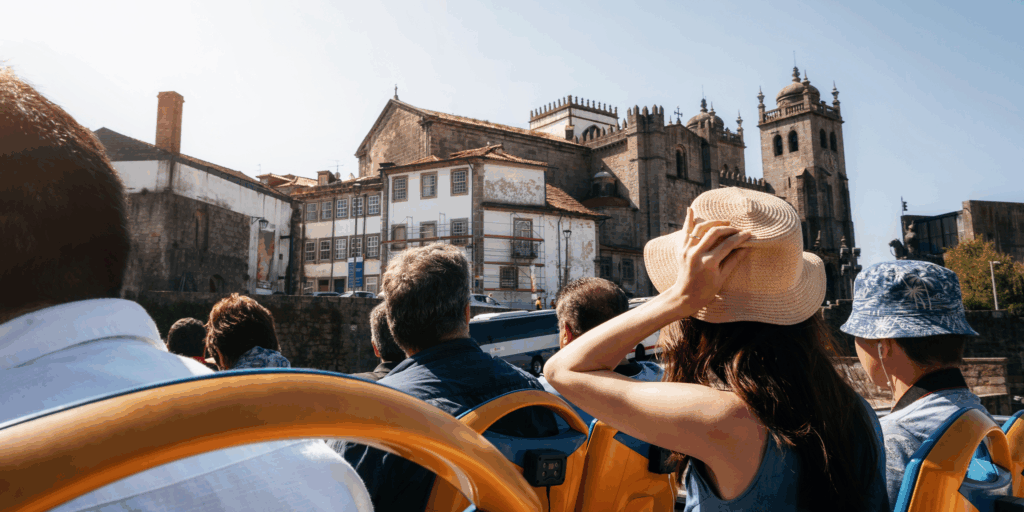
For example, an operator might offer:
- Guaranteed front-row seats
- Guaranteed upper-deck seating
- Reserved seats for groups
- Premium seating with a welcome drink or extra inclusion
- Seat selection as part of a higher-value ticket type
- Better seats bundled into a VIP or premium sightseeing package
That gives guests a clearer reason to trade up.
It also gives operators a way to create more value from the same departure, rather than relying only on adding more passengers or pushing base prices up across the board.
Guided tours are a better fit than pure hop-on hop-off
If there is one place where this feels most natural, it is guided bus tours rather than classic hop-on hop-off.
That is because guided tours are usually:
- Fixed in duration
- Fixed in route
- More structured
- More likely to involve groups staying together
- More likely to be sold as a premium or curated experience
In that setup, the guest is often buying a more controlled experience from the beginning. Reserved seating fits much more comfortably into that kind of product.
A coach tour to a landmark, a scenic route, or a full-day excursion already asks guests to commit to a defined journey. Offering seat choice or seat-based upgrades is not such a big leap there.
Hop-on hop-off is different because flexibility is part of the appeal. So reserved seating may only make sense for selected premium products within that category, rather than across the whole operation.
Families and groups may value certainty more than operators realise
One of the strongest use cases is group seating.
A lot of guests do not necessarily care which seat they get. They just care that they are together.
That matters for:
- Families with children
- Older travellers
- Small friend groups
- Couples booking a premium experience
- Private or semi-private group tours
For those guests, reserved seating is not always about luxury. Sometimes it is about reassurance.
If you are booking a guided bus tour as part of a holiday, knowing your group will definitely sit together may be enough to make one option more attractive than another.
Operators would need to keep it simple
This is the bit that matters most.
Reserved seating only works if it adds clarity rather than friction.
If the setup becomes too complicated, the upgrade loses its appeal very quickly. Guests should not need to study a seating plan like they are revising for an exam just to book a city tour.
Operators would need to think carefully about:
- Whether exact seat selection is necessary, or whether a zone is enough
- Which products genuinely benefit from reserved seating
- How seat selection would be explained during booking
- How boarding would work on the day
- How staff would check and enforce seat assignments
- Whether the added revenue outweighs the operational effort
In many cases, the smartest version may not be full seat-level complexity. It may simply be offering a few clear premium seating options that are easy to understand and easy to manage.
The booking journey would need to do some work
If reserved seating is going to help sell a bus tour, the value has to be obvious.
Guests need to understand:
- What they are choosing
- Why does it cost more
- Whether it is worth it for them
- What happens when they arrive
That means the booking flow must clearly present the upgrade.
“Guaranteed upper deck” is clear.
“Premium seating experience” could mean almost anything and therefore nothing.
As with other seated experiences, the value needs to be visible before checkout. Otherwise, it just looks like a random extra fee with ideas above its station.
It is probably not for every operator
This is not one of those cases where every operator should rush off and redesign the whole product.
For many hop-on hop-off services, open seating will remain the simplest and best approach.
But for operators running:
- Premium guided sightseeing tours
- Fixed coach experiences
- Scenic or panoramic routes
- Night tours
- Luxury sightseeing products
- Tours where groups and seat position matter more
Reserved seating could become a useful way to package value more clearly.
It could also open the door to a slightly different kind of product design, where operators think more deliberately about premium inventory, group certainty, and better upsell paths.
Final thought
Reserved seating is probably not the future of every sightseeing bus…. but it doesn’t need to be.
For the right guided tours and premium bus experiences, it could be a practical way to give guests more certainty, create a clearer premium offer, and increase revenue without changing the route itself.
If you are exploring this from a wider product point of view, it is also worth reading Why seat selection is becoming more important for tourist experiences, The booking system checklist for seated attractions and dinner shows, and How premium seating can increase revenue without changing the show.
And if you want to talk through whether reserved seating could make sense for your own tours, contact us.