Before working in travel tech, I was a production manager at a website-building company focused on the tourism industry. I’ve seen it all: the 80s-style sites that look like Craigslist in beige, the stunning custom builds that cost more than a luxury car, and the “Book now” buttons that whisk you off to a checkout page that looks nothing like the website you just came from.
Most operators don’t want to be in the business of web design. They just want a site that looks professional, works on mobile, and gives travellers the confidence to book. That’s it.
But building something simple, seamless, and trustworthy isn’t always as easy as it sounds.
Tour websites don’t need to be fancy; they need to feel real
Your website is more than a brochure. It’s a handshake. A welcome. A “yes, we’re a real business you can trust with your time, your money, and your holiday.” And when someone lands on your site, they’re deciding whether to believe you.
A great site doesn’t have to be flashy. What matters more is clarity. Can someone find what the tour is, when it runs, how much it costs, and what happens after they book? Does the site feel secure, familiar, and human? Are there real photos? Do the links work?
With ‘dead internet‘ theory floating around and most of us having fallen for at least one scam, trust is the most important currency. In a sea of broken links, outdated content, and AI-generated noise, a real, reliable website still matters. And that trust starts with your site.
The most common ways tour websites fall short
The biggest problem isn’t usually a lack of creativity. It’s a lack of upkeep. We see sites that haven’t been updated in years, where tours that no longer run are still listed, or worse, where a guest is sent off to an unfamiliar booking engine that doesn’t match your brand.
Others are broken in more subtle ways, a pop-up widget that never loads properly, a checkout form that’s hard to navigate on mobile, or a calendar that shows availability from 2022.
And then there’s the disconnected setup. The content lives in one system, the pricing in another, and booking flows through a third. When they don’t talk to each other, the whole experience feels fragile.
The fix isn’t a £10,000 redesign
What most operators need is something dependable. A website that loads quickly, works on phones, keeps the customer on your domain, and updates automatically when your tours or pricing change in your booking platform.
That’s where we come in.
At Palisis, we’ve got a few different options depending on where you’re at:
- Just need a booking widget? No problem. Add it to your current site and you’re up and running.
- Prefer a hosted Webshop? It’s a clean, reliable option that sits on a subdomain and takes care of the full booking flow. It’s popular for a reason.
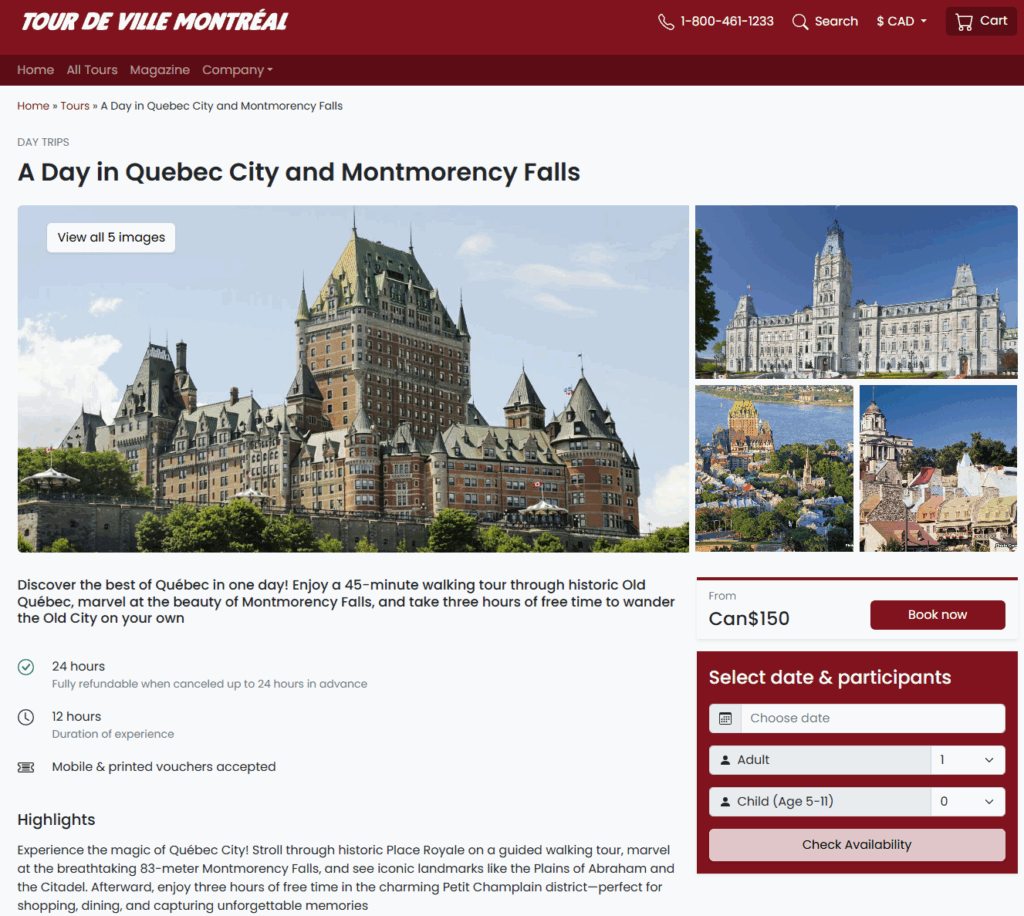
- Want something a bit more flexible without spending a fortune? Our ProSite, a WordPress website, built for TourCMS users. It pulls in your live tours, pricing and availability data and gives you a proper, mobile-friendly site that you or your developer can tweak as needed. Check out Tour de Ville Montréal.
- Looking to build something fully tailored? Use our CustomFlow API to create a booking journey that looks and feels exactly like your brand — like Mirage Wien did.
All with advanced e-Comm tracking (I’m always a marketer at heart; show me the data :P), so whatever your setup, there’s a way to make it work without reinventing the wheel.
If you’ve been burned before…
Maybe you’ve paid a developer who disappeared halfway through the job. Maybe you’ve stitched together your current site with plugins and iframes and crossed fingers. Or maybe you’ve had guests email saying they didn’t feel confident enough to book because the site looked “a bit off.”
If that sounds familiar, you’re not alone. And there is a better way.
Want to see what your website could look like with live data and a smoother booking flow?
We’ll walk you through it, no pressure, just options that work.