If you run hop-on hop-off, you already know this feeling: most customers turn up in twos, but groups create the big operational moments. They are more likely to ask questions and more likely to need help; when something goes wrong, it tends to go wrong at scale.
And the data backs that up.
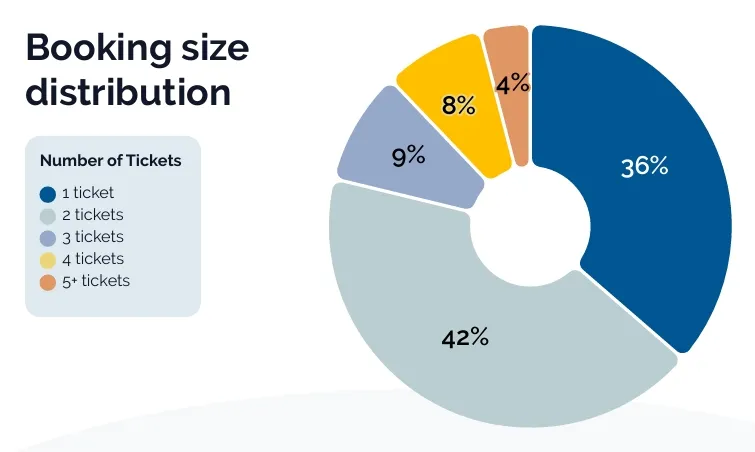
Across Palisis hop-on hop-off operators, most bookings are 1 or 2 tickets (35% and 43%), while larger parties are less common (4% are 5+ tickets). But group tickets have a much higher refund rate (7.4% vs ~2.8% for adult tickets overall).
So the goal is not “get more groups at all costs”. It’s “make group bookings smoother, more profitable, and less risky”.
What counts as a “group” in real life
A coach tour group is the obvious one, but for hop-on hop-off, there are three common types:
- The organised group: School, cruise excursion, corporate, coach operator
- The semi-organised group: Hotel concierge selling 6–12 tickets, then shepherding everyone to the stop
- The spontaneous group: Big family, friends on a city break, stag or hen group who decide on the day
Each one behaves differently, but they all create the same pressure points: boarding, questions, scanning, and refunds.
The three things that make group bookings different
1) Group bookings are less “right now”
Most hop-on hop-off sales are immediate, with 83% sold onsite overall.
But when people do buy in advance, groups plan further ahead than adults and children (average 10.9 days vs ~4.4–4.7 days).
Why it matters
- Longer lead times mean more chances for plans to change.
- The person who booked is often not the person who turns up, which makes on-the-day support harder.
What to do
- Put a simple group policy in writing (change rules, cut-off times, what happens if someone doesn’t show).
- Ask for one “group lead” contact and put their name on the booking.
- Use a short confirmation message that answers the questions you always get: where to start, how to scan, and what to do if the group splits.
2) Group refunds hurt more, even if they are “only” a few percent
Overall, refunds sit around 2.8% of tickets, but group tickets are refunded at 7.4%.
Why it matters
- A single group refund is not one ticket; it’s many.
- Groups are often tied to third parties (agents, concierges, resellers), so the back-and-forth can drag on.
What to do
- Add a “proof before refund” rule that is easy to follow (for example: a quick note of the reason, and whether the ticket was scanned).
- Make sure staff can see, in one place, whether tickets were used or unused. Unused tickets are around 5% overall, so this matters.
- If you work with trade partners, agree on the refund rules upfront, not during the argument.
3) Groups magnify your busiest hours
Ticket buying peaks late morning (10:00 and 11:00 are the biggest booking hours). For HoHo, scanning and riding are normally most active around midday.
When a group arrives at 11:00, it doesn’t just add volume to your day; it also increases the complexity of your job. This added difficulty can be the difference between business-as-usual and an absolute nightmare when pressure is at its peak.
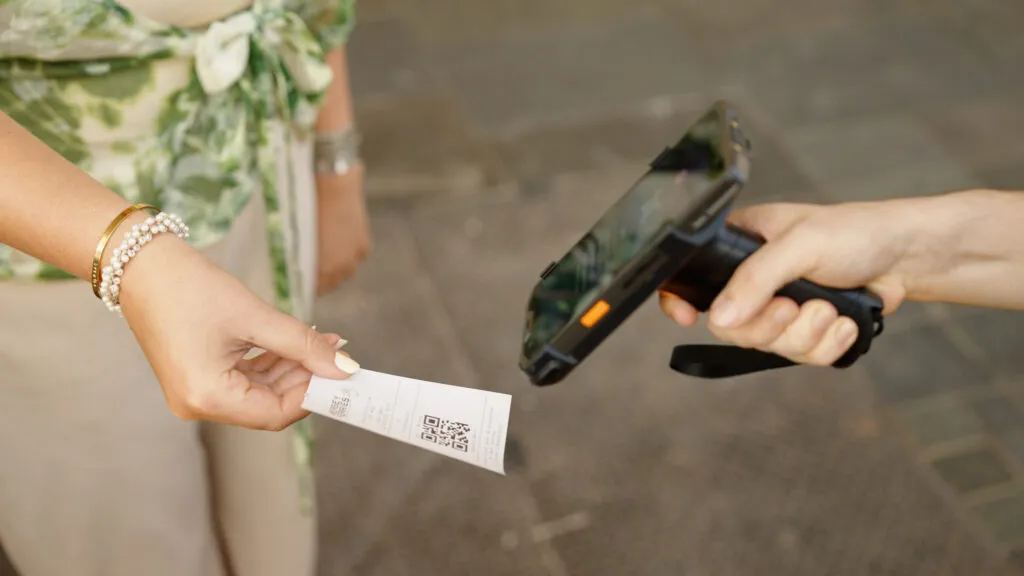
And if your scanning flow is even slightly clunky, you are going be made painfully aware of it when you have 15 hovering…
What to do
- Create a “group-ready” start point at peak time; having clear information on where to go and when things kick off is crucial to a smooth experience. (even if it’s just one clearly marked staff member with a simple script).
- Make group scanning fast: one QR, quick confirmation, and a clear “go here next” instruction.
- Have a plan for split groups (half want coffee, half want to board). Tell them what happens if they start at different times.
Practical checklist: Are you set up for group bookings?
Your product and pricing
Your operations
Your channels and partners
Your refunds and support
A simple way to turn groups into a strength
If you want one practical move that usually pays off fast: build a “group start pack”.
Make it a one-page guide that answers the 20 common questions the group is guaranteed to ask.
Include:
- Where to start
- How scanning works (and what to do if the group splits)
- The most common questions (toilets, route duration, last bus time, accessibility)
- Your change and refund rules in plain language
Want to learn more about your customers? Download our 2025 state of the industry report to discover what you should do to make the most of traveller buying behaviours.