Ferry ticketing has a slightly unusual challenge.
Some passengers plan ahead, book online and arrive with a ticket already on their phone.
Others walk up to the dock five minutes before departure and expect to buy one there.
Then you have travel agents, hotel partners, groups, return journeys, different passenger types and, depending on the operation, vehicles, bikes or additional extras to account for too.
None of those sales channels is particularly complicated on its own. The difficulty starts when they are not working from the same availability.
For ferry operators, managing online and dockside ticket sales in one place means every booking, wherever it happens, needs to update the same inventory.
That sounds simple. Operationally, it makes a very big difference.
Why ferry ticketing gets complicated quickly
A straightforward ferry service might have ten departures today.
But each departure can be sold in several different places:
- through your website
- at the dock or ticket office
- through a reseller or travel agent
- via an OTA
- through a hotel or tourism partner
- by staff taking bookings over the phone
If those channels are managed separately, your team has to work out how many spaces have actually been sold before deciding whether another ticket can be issued.
That is manageable when the boat is quiet.
It becomes much less manageable when the next departure is almost full and there is a queue forming at the ticket desk.
This is one of the reasons many operators move towards an all-in-one ticketing system, where online, on-site and partner sales can all feed into the same availability.
What does ferry ticketing software need to manage?
For operators selling both online and at the dock, ferry ticketing software needs to do more than process payments.
It needs to connect the different parts of the operation.
That normally means managing:
- departures and schedules
- capacity
- online bookings
- walk-up sales
- different ticket and passenger categories
- partner and reseller bookings
- ticket validation
- changes and cancellations
- operational reporting
The important part is that these do not exist as separate pieces of information.
If somebody buys the final two places online, the member of staff at the dock needs to know those places are no longer available.
Online and dockside sales should use the same availability
This is probably the most important part.
Imagine a 14:00 sailing with space for 80 passengers.
By lunchtime, 62 tickets have been sold online.
Another eight are then purchased at the dock.
The remaining capacity should now be ten, regardless of where the next customer tries to book.
If the webshop and dockside point of sale are working from different figures, you introduce the possibility of overselling.
The alternative is usually manual allocation.
An operator might reserve 60 tickets for online sales and keep 20 available at the dock, for example.
That protects the walk-up allocation, but it can also leave you with an odd situation where the website says a sailing is sold out while there are still empty spaces available for somebody standing at the terminal.
Shared availability gives operators much more flexibility because every sales channel works from the same capacity.
And if capacity changes from one vessel or departure to another, the system needs to reflect that too rather than forcing every sailing into the same limit.
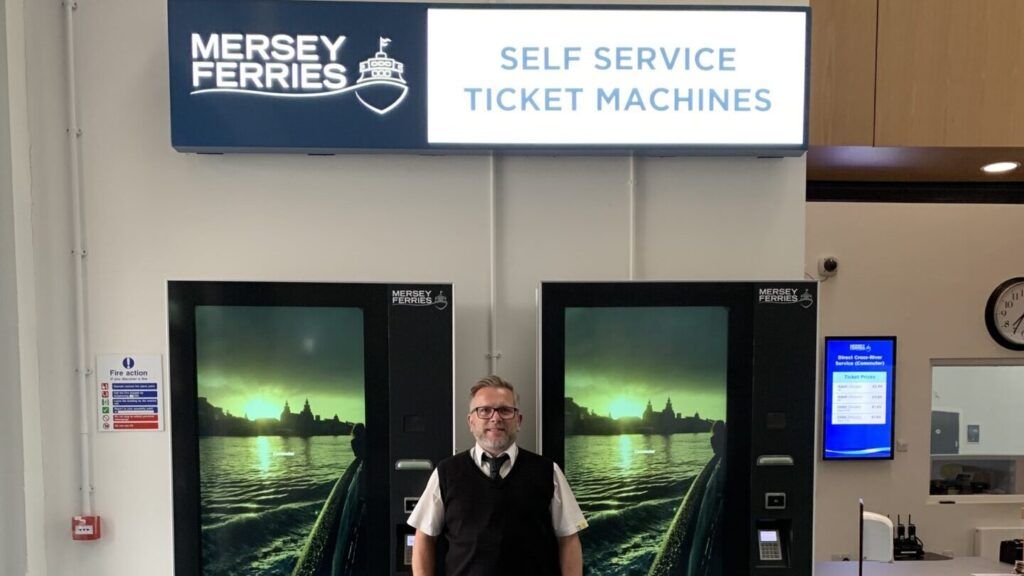
Dockside sales still need to be quick
Online booking gets a lot of attention, but walk-up sales remain an important part of ferry operations.
Passengers may be:
- deciding what to do that day
- arriving from another attraction
- travelling without a fixed itinerary
- buying a return journey
- joining friends who have already booked
The person selling the ticket should not need to work through a complicated booking process while a queue builds behind the customer.
A dockside point of sale should make the common transactions quick.
Choose the departure. Select the ticket type. Take payment. Issue the ticket.
This becomes particularly important during short turnaround periods, when the same team may be selling tickets while preparing passengers to board.
If you are reviewing your on-site setup, our guide to POS systems for tour operators looks at what operators should consider when choosing hardware and managing walk-up sales.
Let passengers book before they arrive
The other side of the operation is encouraging more passengers to buy before reaching the dock.
Online ferry ticketing gives customers the ability to check departures, select the sailing they want and pay in advance.
For the operator, that does more than provide another sales channel.
Advance bookings also give the team a clearer idea of demand.
If tomorrow’s 10:00 sailing is already heavily booked while the 11:30 has plenty of availability, staff can see that before the day begins.
It can help with staffing, passenger communication and decisions about how much walk-up capacity is likely to remain.

Make departures part of the booking logic
A ferry ticket is not simply admission.
It usually relates to a specific journey.
That means the booking system needs to understand departures.
A passenger might be buying:
- a single journey
- a return journey
- a ticket for a particular departure
- an open return
- an adult and child combination
- a group booking
- additional items such as a bicycle
The booking needs to reserve the appropriate capacity against the correct sailing.
When schedules change, the team also needs a clear way to see which passengers are affected.
This is where a ferry-specific operational workflow starts to matter much more than simply having an online checkout.
Managing different vessels and capacities
Capacity is not always static either.
You may operate different boats on different routes, replace a vessel during maintenance or change capacity depending on the departure.
That makes it useful to connect the vessel itself to the departure rather than manually changing ticket availability every time the operating plan changes.
Palisis’ resource management tools are designed around this kind of operational problem, allowing operators to connect resources and capacity to individual departures.
Manage different passenger types without making sales difficult
Adult and child tickets are only the beginning for some ferry operators.
You may also have:
- concessions
- residents
- students
- families
- infants
- groups
- bicycles
- pets
- vehicles
Not every ferry needs all of these, of course.
But where different categories exist, they should be easy for staff and passengers to understand without making the booking flow unnecessarily complicated.
The same applies to capacity.
One bicycle does not necessarily use capacity in the same way as one passenger. A vehicle ferry has another layer of complexity again.
The ticketing setup needs to reflect what actually limits each departure.
Selling online and at the dock, but still keeping availability aligned manually?
Palisis connects your webshop, point of sale, departures and ticket validation so each sales channel can work from the same availability. Talk to our team about how this could work for your ferry operation.
Partner sales should not create another spreadsheet
Ferry services are often part of a wider destination experience.
Hotels might sell tickets to guests. Tour operators might include the ferry within an itinerary. Visitor centres may sell tickets across the counter.
These partnerships can be valuable, but they become operationally awkward if every partner booking needs to be communicated manually.
Ideally, authorised partners should be able to sell against the same live availability as your own channels.
That gives the operator a much clearer picture of what has actually been sold while reducing the chances of somebody promising a place that no longer exists.
It also makes reporting considerably easier when you need to see where bookings came from.
If partner distribution is becoming a bigger part of your business, having those bookings flow into the same system as your direct sales avoids creating another separate pool of inventory to manage.
Ticket validation should be as simple as the sale
Once the passenger reaches the boarding point, the system has another job.
It needs to confirm that the ticket is valid.
For ferry operators, validation might happen at a terminal, on a pontoon, beside the vessel or directly as passengers board.
Staff should be able to scan the ticket and quickly see whether it is valid for that journey.
Dedicated ticket validation devices can be particularly useful where staff are scanning continuously or working outside.
The information recorded at validation can also be useful operationally.
There is a difference between knowing that 70 people bought tickets and knowing how many have actually boarded.
For services running multiple departures, that distinction matters.

Think about what happens when connectivity disappears
Ferries do not always operate in places blessed with perfect Wi-Fi.
Ticket desks may be outdoors. Boarding points can be some distance from the main terminal. Mobile connectivity may vary throughout the route.
A ticketing operation should therefore have a plan for poor connectivity.
That might include devices capable of working temporarily offline, local ticket information or clear procedures for what staff should do if the connection drops.
The important thing is deciding this before there is a queue of passengers waiting to board.
Changes need to update everywhere too
Passengers change their plans.
They miss sailings. They arrive early. Weather affects services. Operators consolidate departures. Trips are cancelled.
A connected system is useful not only when a booking is created but when it changes.
If a passenger is moved from the 13:00 sailing to the 14:30, the capacity on both departures should reflect that.
Otherwise, teams can end up correcting one booking while accidentally creating another availability problem elsewhere.
One view makes the operation easier to understand
When online sales, dockside bookings and partner reservations all feed into the same system, reporting becomes considerably more useful.
Instead of asking:
“How many tickets did we sell online?”
you can ask:
“How many people are booked on the 15:00 departure?”
And then break that figure down by channel if you need to.
Operators can look at:
- bookings by departure
- sales by channel
- passenger numbers
- capacity utilisation
- walk-up versus advance sales
- validation and boarding information
- revenue by product or ticket type
That is much closer to the information the operations team actually needs.
What should ferry operators look for in a ticketing system?
If you are comparing ferry ticketing software, it is worth looking beyond whether the system has an online shop and a point of sale.
Ask how the two actually work together.
Can online and dockside sales share capacity?
Can partners sell against live availability?
Can you manage individual departures?
Can different vessels have different capacities?
What happens when somebody changes sailings?
Can staff validate tickets at boarding?
Can the system continue operating if connectivity is unreliable?
Can your team see bookings and passenger numbers across all sales channels?
These questions tell you much more about how the system will work at 10:55 on a busy Saturday when the 11:00 ferry is almost full.
Bringing online and dockside ferry sales together
Passengers do not really care which sales channel they are using.
They just want to see whether there is space, buy the right ticket and get on the ferry.
For the operator, every one of those transactions affects the same departure.
Palisis brings online booking, dockside point of sale, partner sales, departures, capacity and ticket validation into one system, so your team is not trying to keep separate sales channels aligned throughout the day.
If you are currently managing online and dockside ticket sales separately, we can show you what that could look like in one system.
Talk to the Palisis team about your ferry ticketing setup.
FAQs about ferry ticketing software
What is ferry ticketing software?
Ferry ticketing software is a booking and operational system used to sell and manage tickets for ferry and boat services.
Depending on the operation, it can manage online bookings, point-of-sale transactions, departures, passenger types, capacity, partner sales and ticket validation.
Can ferry operators manage online and dockside sales together?
Yes. A connected ferry ticketing system can allow online bookings and dockside point-of-sale transactions to use the same availability.
When a ticket is sold through one channel, the remaining capacity can be updated for the others.
How can ferry operators avoid overselling departures?
The most reliable approach is to have all sales channels use shared availability for each departure.
Online bookings, walk-up sales and partner bookings should all reduce the same available capacity rather than being managed through separate allocations or spreadsheets.
Can travel agents and tourism partners sell ferry tickets?
Yes. Ferry operators can give approved resellers access to products or availability so they can make bookings on behalf of customers.
How this works will depend on the ticketing and distribution setup being used.
Can ferry tickets be scanned at boarding?
Yes. QR codes or barcodes can be scanned at the boarding point to confirm that a passenger has a valid ticket for the relevant service.
Validation data can also help operators compare the number of tickets sold with the number of passengers who have actually boarded.
Does ferry ticketing software work offline?
Some ticketing systems and validation devices support offline operation when an internet connection is unavailable.
This can be particularly useful for outdoor ticket desks, remote boarding locations and services where connectivity cannot always be guaranteed.