If you only improve one part of the day, make it this window.
In our 2025 state of HOHO data, nearly 40% of bookings happen between 10:00 and 12:00 (download your copy here). That’s not just a “busy patch”; it’s basically your whole day trying to happen before lunch.
And the tricky bit is it’s not just volume. It’s the mix:
- New arrivals who need reassurance
- People who are late and stressed
- People who want the “quickest option” but also want to ask six questions first
- Families and groups trying to pay as one, split as five, and start as “wherever we are right now”
So here’s a practical playbook you can use without hiring a small army.
The goal for 10:00 to 12:00
You’re aiming for three things:
- Keep the queue moving
- Stop questions blocking payment
- Make scanning feel easy, not like airport security
If you nail those, you’ll sell more, you’ll issue fewer refunds, and your team won’t look like they’ve aged three years by 12:15.
The two-person staffing plan that actually works
Even with a small team, you can run this window properly by splitting roles. The mistake is having one person do everything.
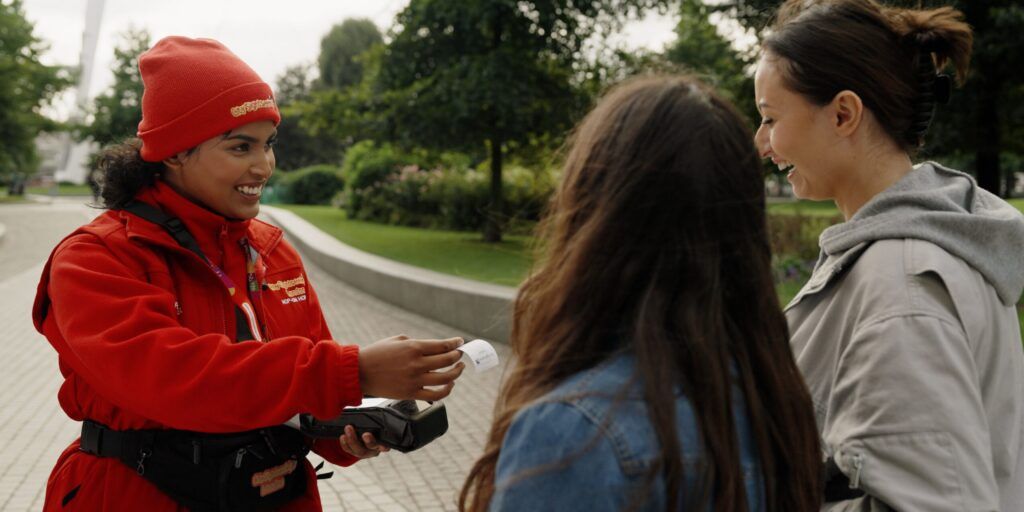
Role 1: the “flow” person (front of the queue)
Their job is to stop the queue from becoming a debate club.
They stand slightly before the payment point and do three things:
- Triage: “How many tickets?” “Today or another day?” “Any kids?”
- Direct: send quick buyers to the payment person, send question-heavy guests to the side
- Pre-empt the top questions with a 10-second script
Simple script that works:
“Tickets start as soon as you use them. Most people go for 24 hours. If you’re ready to buy, head to this side.”
This one role is the difference between a queue and a knot.
Role 2: the “payment” person (sales and scanning)
Their job is to take money fast and cleanly.
They should not be answering long questions. If they start doing that, you’ll see the queue double in five minutes.
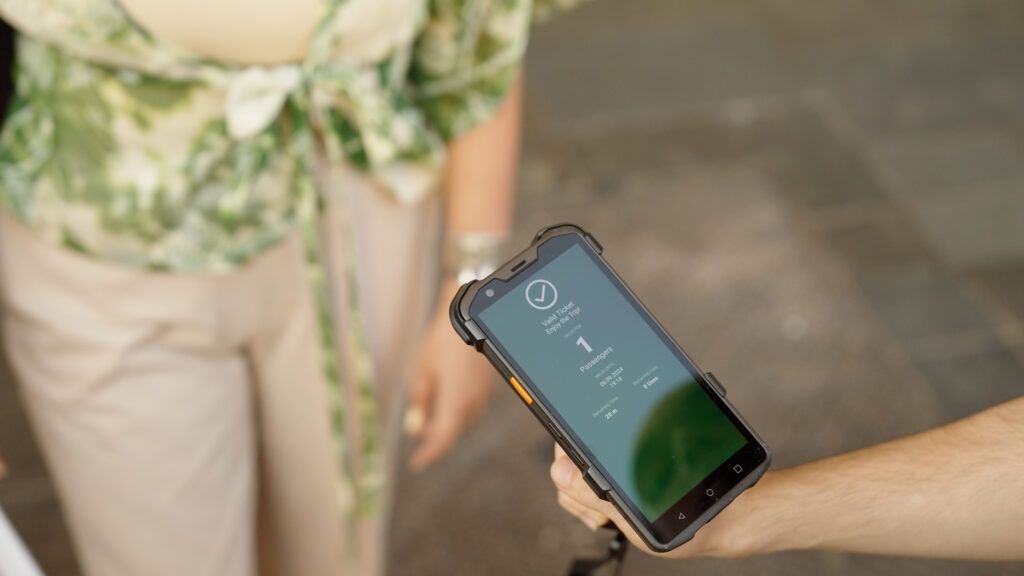
If you have a third person, use them like this:
- Role 3: the “scanner and helper” who deals with redemption issues, QR won’t scan moments, and “I bought it online, but it’s in my friend’s email” situations.
Micro rule that saves your morning
If someone asks a question that takes more than 15 seconds to answer, they step aside. You can say it kindly:
“I’ll help you properly in one moment, just let me keep this line moving.”
You’re not being rude. You’re stopping ten people behind them from getting grumpy and walking off.
Queue design that fixes 80% of the chaos
You don’t need cones and a clipboard. You need a clear shape and one or two signs that do the heavy lifting.
Where to stand
- The flow person stands 2 to 3 metres ahead of the payment point.
- The payment person stands at the payment point, with zero distractions behind them.
- A small “questions spot” sits to the side, not behind the queue.
If the question spot is behind the line, people feel as if they’re losing their place and get defensive. If it’s to the side, it feels normal.
The simplest layout
You want a “Y” shape:
- One line comes in
- It splits into:
That’s it.
The two signs that actually earn their keep
Put these where people can read them while they’re waiting:
Sign 1: “Most people choose 24 hours”
This reduces decision time. It puts the most optimal choice front and centre, and provides social proof for going with it. Which is also why it’s so important to have quality reviews; it helps people just know you are trustworthy.
Sign 2: “Tickets start when you use them”
This reduces the biggest misunderstanding that causes refunds and arguments later.
If you want to be slightly cheeky (and human), you can add:
“Have your card ready and your QR open. Future you will thank you.”
In the section where you say “most people choose 24 hours” and “tickets start when you use them”, link to the part of your research that covers product mix and ticket types, plus anything about booking and scan behaviour.
What to do about groups in this window
Groups arriving between 10:00 and 12:00 are when stops fall apart.
Here’s the rule:
- Groups go to the side immediately.
- One person (group lead) does the talking.
- Payment happens once, scanning happens in a batch.
Your flow person should say:
“Are you all together? Great, step over here and we’ll get you sorted without holding everyone else up.”
This feels considerate to the group and to the queue. Everyone wins.
Kiosk and QR posters, if you have them
This window is where self-service pays for itself, but only if it’s pointed properly.
- Put your QR poster before the queue starts, not at the payment point.
- Have the flow person say:
“If you want to skip the line, scan here and buy on your phone.”
People will do it. They just need permission and a nudge.
Quick wins for customer flow
There are some crucial takeaways from this, but there are some ideas that you should take out of the realm of theory and apply them as soon as possible:
- Split roles: flow vs payment
- Create a question spot to the side
- Put up two signs: “Tickets start when you use them” and “Most people choose 24 hours”
- Move groups out of the main line early
Ready to smooth out the queues? Boost your efficiency and delight your customers with unbeatable Palisis’ ticketing and reservation technology today.