We recently read a leadership piece imagining what travel and tourism could look like in 2046. It raised useful questions around trust, AI, access and consolidation, but it also left us thinking about the future in a more practical way. The brief itself focuses on who owns trust, where value sits in an AI-native industry, whether travel becomes more of a right or a privilege, and whether the industry consolidates or fragments.
All of that matters. But for operators, another question feels just as important: what will a real travel day actually look like in 2046?
The fundamentals will stay the same
For all the talk of AI agents, invisible booking and shifting distribution models, the basics of travel are unlikely to change that much. People will still want to go somewhere interesting, feel confident before they buy, turn up without stress, and come away feeling the experience was worth their time and money.
That is worth saying plainly, because future-of-travel conversations can sometimes make it sound as if technology will reinvent the whole thing. More likely, it will change the delivery rather than the desire. People will still want convenience, trust and a memorable day out. They will just expect those things with less friction.
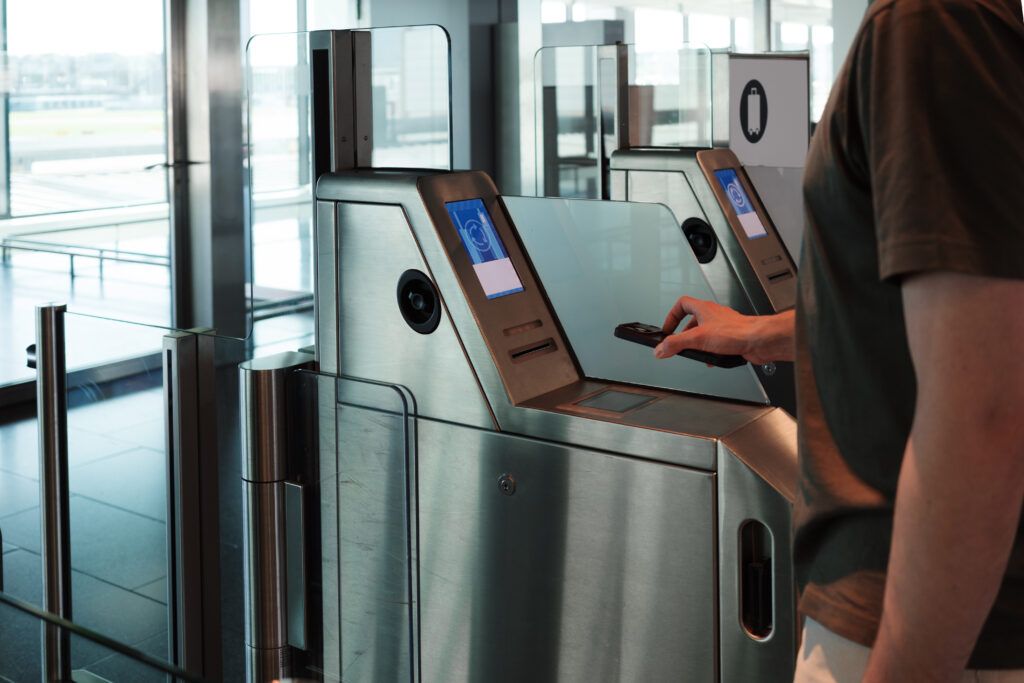
Search will change, but reassurance will still matter
The biggest visible change may be search. Today, people still bounce between Google, maps, OTAs, reviews, social media and friends’ recommendations. In 2046, much of that could be compressed into AI-led planning. The leadership brief leans in that direction too, arguing that AI agents may reduce discovery effort and take on more decision-making for travellers.
But even if search becomes less visible, the need for reassurance does not disappear. Travellers will still need clear product information, trustworthy reviews, current availability and confidence that what they are booking is actually right for them. Being worth finding will matter just as much as it does now.
Booking will probably become more invisible
By 2046, the booking step itself may fade into the background. Instead of consciously opening a website, comparing options and going through a checkout, a traveller may approve a recommendation inside a wallet, assistant, city app or travel bundle.
The booking still exists, of course. The inventory still needs to be right, the payment still needs to go through, and the guest still needs a usable ticket. But the process may feel less like “booking” and more like approving a decision.

That is great for convenience, but it comes with a trade-off. The smoother the transaction becomes, the easier it is for the platform, assistant or reseller to own the relationship while the operator fades into the background.
Trust may become even more important
One of the strongest ideas in the leadership brief is that trust becomes more valuable, not less, in an AI-heavy world. It describes trust as something built through many small moments and warns that more AI-driven channels could fragment accountability when things go wrong.
That feels right. The easier it becomes to generate polished content, recommendations and even fake credibility, the more valuable real proof becomes. In 2046, trust may depend less on who sounds impressive and more on who feels consistently dependable.
That means accurate listings, believable reviews, transparent pricing, honest communication and a day-on-the-ground experience that matches what was sold. In other words, trust will still be practical.
The future may be cleaner, quieter and more regulated
This is one area where the future is already visible.
Operators are not waiting until 2046 to start adapting. City Sightseeing Glasgow says it introduced 10 electric buses as part of its move towards a greener sightseeing fleet, and Vienna Sightseeing now promotes fully electric hop-on hop-off buses.
More broadly, European cities are already tightening access rules. Transport & Environment says zero-emission zones are already in force and 35 are planned across Europe, while Urban Access Regulations says hundreds of European cities now have vehicle entry regulations.
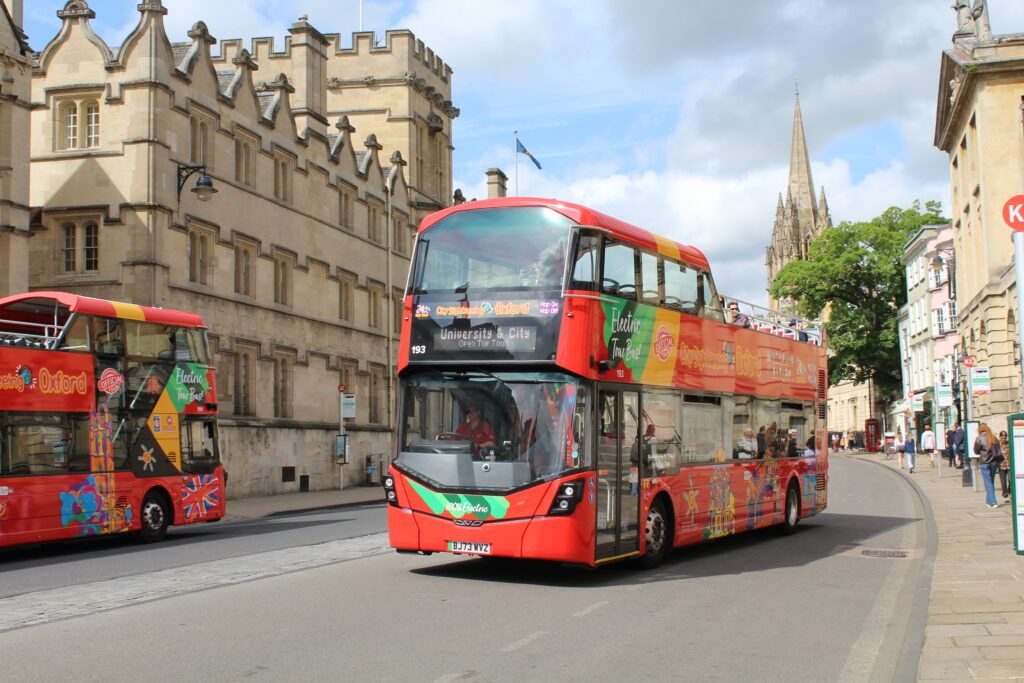
That matters because hop-on hop-off, sightseeing buses and city transport experiences will not disappear just because cities are changing. They will adapt. Vehicles are likely to get cleaner, quieter and more compliant with city-centre restrictions. That may not sound especially glamorous, but it is exactly the sort of practical shift that shapes what travel in 2046 will really look like.
Tours may become more valuable, not less
There is a common assumption that better technology will make travellers more independent and less interested in structured experiences. Maybe. But there is another possibility that feels just as likely: as life gets busier and more mentally crowded, well-run tours become more attractive because they take the effort out of it.
A good tour does more than provide information. It saves people from having to plan the route, second-guess the timing, work out what is worth seeing, and waste half a day on poor choices. In that sense, the future value of tours may sit not just in access or storytelling, but in decision relief.
If anything, that becomes more useful in a world where people are overloaded.
Customer service will be split in two
Routine service questions are likely to become heavily automated. Meeting points, rescheduling, voucher help, opening times, language questions and weather-related policies all feel like obvious areas for AI support.
But when something has actually gone wrong, the human side may become even more important. Stress, confusion, missed departures and real-world problems do not disappear just because the interface is smarter. So the likely outcome is not the death of customer service, but a split: simple questions get automated, while recovery, empathy and exceptions become the moments where human support matters most.
Travel may feel more digital, more cashless and more accountable
This is another trend that feels less like science fiction and more like a continuation of what is already happening. Digital tickets, mobile wallets, contactless payments and cashless travel are all becoming more normal. Even outside tours and attractions, smart tourism projects increasingly frame seamless, cashless movement as part of the visitor experience. For example, Mastercard announced contactless Tap & Go payments on Phuket Smart Bus in 2026 as part of Phuket’s push to become a smart tourism destination.
Alongside that comes more pressure on operators to be cleaner on the back-office side too. As more markets tighten tax reporting and compliance requirements, digital transactions and fiscalisation become less of a nice-to-have and more of a basic expectation. That is unlikely to reverse over the next twenty years. If anything, it probably becomes more normal, more global and much more embedded in day-to-day operations.
Travel may feel more precious
The leadership brief also raises a bigger question: Does travel remain broadly accessible, or does it become more of a privilege? That is not just philosophical. It has real implications for how people travel and what they expect.
If travel becomes more expensive, more regulated or simply more deliberate, people may take fewer trips but expect more from each day. That could mean shorter breaks, tighter itineraries and a stronger preference for experiences that make the time feel well spent.
That is one reason tours and attractions may remain central. If travellers want less faff and more certainty, operators who can help them make the most of their time become even more valuable.
So what changes, and what stays the same?
A lot changes. Search becomes more assisted. Booking becomes more invisible. Vehicles become cleaner. Cities become stricter. Payments become more digital. Compliance becomes heavier. Customer service becomes more automated. Trust becomes harder won.
But the deeper fundamentals stay remarkably familiar. People still want simple, enjoyable experiences. They still want to feel confident before they buy. They still want the thing they booked to match the thing they get. And they still want a day out that feels worth leaving the hotel for.
Maybe that is the simplest way to think about travel in 2046. Not as a complete reinvention of travel, but as a gradual reduction in the friction around it.
And the businesses that win may not be the ones that sound the most futuristic. They may be the ones who make the future feel easy.
Staying up to date with leading travel technologies is crucial for operators to stay in the loop and never risk being left behind. Working with Palisis is all about keeping on top of emerging changes.
Reach out today to see how Palisis can help you prepare for 2046 (or maybe 2027)