There is a reason OTA commission gets under people’s skin in a way that other costs often do not.
Most operators understand the basics. Distribution is not free. Marketplaces spend heavily on brand, traffic, technology, mobile apps, payments, localisation, trust and conversion. That reach can be hugely valuable, especially for smaller operators that would struggle to build the same level of visibility on their own. OTAs can also drive serious volume. Arival reported that OTAs captured one-third of bookings in the tours, activities, and attractions sector in 2024, up from 24% in 2019.
So this is not an article arguing that OTAs have no value. Because OTAs are an important cornerstone to boosting your sales distribution.
Rather, we will explore why the cost of that value can feel so different.
The frustration is not just the cut
If you pay more for a hotel room, you usually know what the higher price gets you. A better view. More space. Breakfast. Lounge access. Something visible; a tangible benefit that clearly, measurably augments the experience.
If you pay more for an experience, you expect something more there too. Better guides, more languages, better vehicles or boats, better route access with stronger partnerships and maybe superior insurance cover.
All sorts of things to take make things feel more valuable, in a real way.
With OTA distribution, the value can feel much harder to pin down. It’s simply less clear.
An operator may be asked to pay more commission, join a visibility programme, or invest in promotional tools, but still not be fully sure what that extra spend will deliver in practice.
Will it mean more impressions? Better placement? Higher quality traffic? More profitable bookings? Or just a more expensive way to stay competitive?
It’s trickier to pin down because it lacks that clear, definitive tangible benefit.
That uncertainty is what makes the model feel different.
OTAs did not invent the desire to travel
This is the bit many operators feel but do not always say out loud.
Deliveroo did not invent hunger.
Booking.com did not invent holidays.
Amazon did not invent the desire to buy household goods.
Uber did not invent the need for transport.
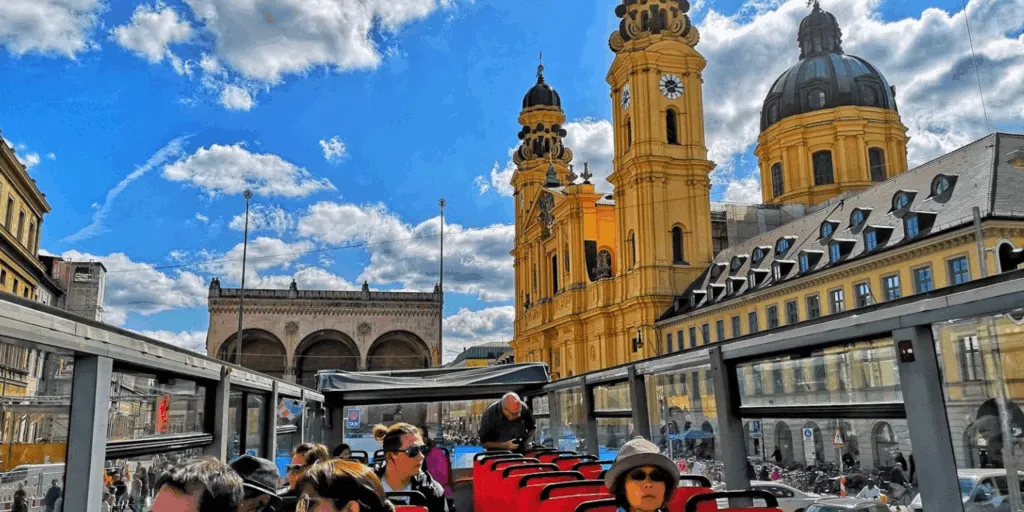
… And OTAs did not invent the desire to visit Rome.
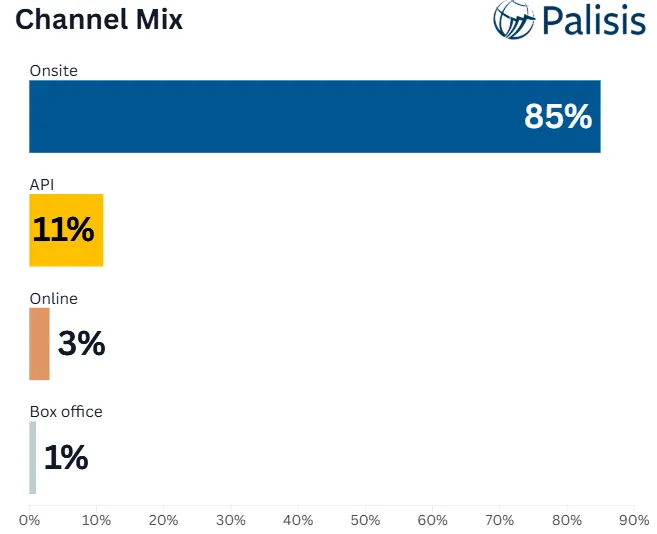
The desire to travel exists without OTAs and online bookings. And we can see this because so many HoHo experiences are still purchased on-site, as showcased in our State of HoHo report.
What OTAs did do, brilliantly, was make the process smoother, more centralised and more habit-forming.
That matters because it changes where the booking happens.
The traveller may already want the city break, the boat trip, the museum ticket or the walking tour. The platform does not usually create that original desire from scratch. What it does is capture that intent, reduce friction, and become the place where the transaction is most likely to happen.
That is why OTA commission can feel less like pure marketing spend and more like paying for access to a gate.
Platform capture is what happens when demand that used to be more distributed starts flowing through a small number of dominant intermediaries.
Before that shift, bookings might come through a wider mix of local agents, direct websites, tourism offices, hotel concierges, word of mouth, paid search and smaller reseller networks.
Then the market changes.
A few big platforms become the main discovery layer. They are where people compare. They are where people browse. They are where people trust the checkout. Over time, those platforms stop feeling like one option among many and start feeling more like infrastructure.
And infrastructure can charge rent.
That is the tension. The value is real, but so is the dependency.
Why OTA commission feels so hard to judge
The issue is not simply that commission can be high. OTA performance depends on a long list of variables, and operators do not always know how heavily each is weighted.

Expedia says visibility is influenced by search relevancy, offer strength and guest experience, and notes that listings in the top 10 sort positions on Expedia and Hotels.com receive 62% of clicks. Viator is similarly open to the idea that higher commissions through Accelerate can increase exposure, and says even a 1% increase in the standard minimum commission rate can improve visibility.
That transparency helps, but only up to a point.
Because the operator still cannot fully see the whole picture. They don’t always know what competitors are paying. They don’t know the full weighting of every ranking factor. They can’t easily isolate whether improved performance came from commission, reviews, availability, pricing, listing quality, seasonality, or a change in demand.
In other words, they are buying visibility inside a system they can only partly inspect.
That is why OTA commission can feel less like a standard rate card and more like a black-box marketplace.
Of course, not every performance problem is commercial. Sometimes the basics are the real issue. Poor product content, weak imagery, patchy availability, or technical errors can quietly damage visibility and conversion before commission ever enters the conversation.
That is why it is worth getting the fundamentals right, something that you can glean into with our content:
- The simple content checklist for selling on OTAs
- Stop overselling: how to keep live availability accurate across OTAs
- Why OTA errors happen (and how to reduce them).
Why OTAs can justify a high commission
From the OTA’s point of view, the answer is simple enough.
The commission helps fund the machine. Paid search. Brand advertising. App growth. Retargeting. International visibility. Localised checkout. Customer acquisition at scale.
And the proof, from their side, is the passenger volume they deliver. Having access to a wide array of OTA integrations lets your products shine across channels that you never would have been able to access, to potential customers who may never have found you otherwise.
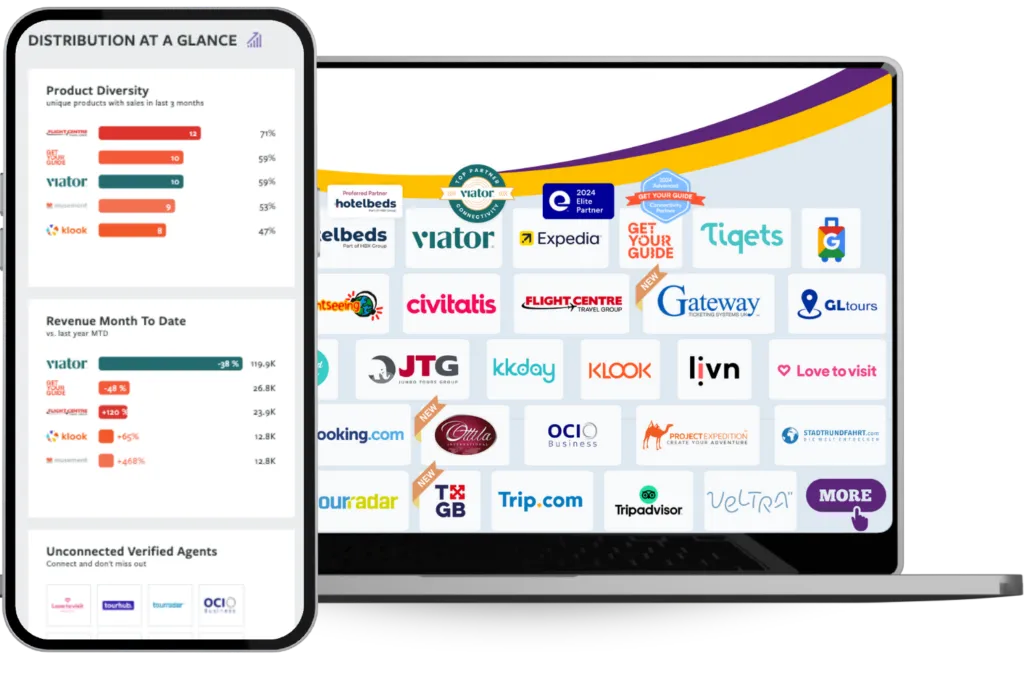
That does not mean operators have to like the cost. But it does explain why OTAs believe the model is justified. They are not only listing products. They are investing heavily to attract and convert demand.
The tension is that operators are the ones delivering the actual experience, carrying the operational risk, employing the staff and protecting the guest experience on the ground.
So both sides feel they are doing the hard part. Just in different ways.
One OTA is not the same as another
This is where the conversation often gets oversimplified.
There is no single OTA algorithm. Each platform behaves differently, and those rules can keep changing.
A tour that performs brilliantly on one OTA may struggle on another. One platform may give more opportunities to newer products. Another may favour listings with stronger historical performance. One may be more sensitive to pricing or may lean harder on conversion, reviews or cancellation behaviour.
That matters because it means operators cannot treat “OTA strategy” as one single task. They need to understand each platform on its own terms.
And that is also why raising commission is not a magic fix.
When higher commission stops feeling strategic
For some operators, increasing commission or joining a visibility programme can work, especially at first.
But if more suppliers do the same thing, the bar shifts. The average commission rises, competition intensifies, and the advantage becomes harder to hold.
At that point, success is less about simply paying more and more about whether the product stands out overall. Is it priced well? Is it converting? Are the reviews strong? Is the content clear? Is availability reliable? Does it feel different from the alternatives?
That is why the smarter question is not “should I just raise commission?”
It is “what makes this product genuinely more compelling than the others around it?”
Because if all you do is spend more without improving the rest, you may buy a short-term lift without building a stronger position.
Why this matters more for smaller operators
Large brands usually have more room to manoeuvre. They may have stronger direct traffic, bigger marketing budgets, more reviews, better-known names and more leverage in negotiation.
Smaller operators do not always have those advantages.
They may rely on OTAs for reach while also needing to protect already-thin margins. That makes every percentage point matter more. It also means the market can feel uneven. A model that is manageable for one supplier may be painful for another.
That is one reason this matters so much in tours and activities. OTA influence in the sector is growing, while operator concern about direct bookings has been rising too. Arival reported in January 2026 that operator website bookings were down year-on-year, while OTA bookings continued to rise.
The problem is not OTAs. It is opacity
This is an important distinction.
OTAs are not the villain of the story. They solve real problems. They create convenience for travellers. They help operators reach people who may never have found them otherwise. They standardise discovery and checkout in a fragmented market.
But for operators, frustration often begins when the relationship becomes difficult to evaluate.
Traditional pricing tells you what you are paying for.
OTA pricing can feel different because the value is mediated through hidden ranking systems, shifting variables, negotiated commercial terms and platform-controlled visibility. The operator pays real money, but the exact benefit can remain frustratingly hard to isolate.
That does not make the system unfair by default.
But it does make it harder to judge with confidence.
And the funnel is still getting wider
If OTA commission already feels high, it is worth looking at where some of the biggest platforms are heading next.
It is increasingly about capturing them earlier, at the inspiration stage, and keeping them later, after the sale, too.
Expedia’s Trip Matching feature turns public Instagram Reels into suggested itineraries with hotels, activities and trip ideas. TripAdvisor has demonstrated AI tools that can identify locations and experiences from influencer videos and turn them into ready-to-book itineraries, while Booking.com has been expanding AI trip planning, natural-language search and more proactive trip support.
I’d say… the pattern is clear. The goal is not only to help someone book. It is to become the layer between “I saw something interesting” and “I’ve booked it”, then expand into everything that happens next.
Platforms are not just competing for bookings anymore; they are trying to own more of the traveller journey, from inspiration to itinerary to in-trip decisions. In simple terms, the funnel is getting wider, and the platform is trying to sit in more of it.
Why direct bookings still matter
This is also why “just get more direct bookings” is both true and unhelpful.
Of course, operators want more direct bookings. The problem is that they are trying to win them back in a market where discovery, trust and convenience have increasingly been captured by a small number of powerful platforms.
That is exactly why hotels have spent years trying to claw back direct relationships. Once a handful of intermediaries become the default places where people search, compare and book, loyalty weakens, suppliers become more interchangeable, and the direct route becomes harder to defend.
Tour and activity operators are dealing with their own version of that challenge now. The data that we have pulled together shows exactly how important direct-to-consumer funnels are in securing large swaths of your customers.
If that wider channel picture still feels muddy, it helps to step back and clarify the basics, starting with Direct bookings, OTA bookings, and reseller bookings: what’s the difference?. Because not every sale type brings the same cost, the same customer relationship, or the same long-term value.
What operators should take from this
The point is not to reject OTAs.
The point is to understand them properly.
The OTA can be a brilliant partner, but only if you understand how that channel works and keep adapting. That means reviewing pricing, sharpening content, watching competitors, managing reviews, protecting conversion and keeping availability accurate.
Sometimes a tactic will work for a while. Then the market shifts, the platform changes, or competitors catch up.
That is why distribution needs active management, not a one-off setup.
And not every OTA challenge is solved by paying more. Sometimes the better next step is improving content, reducing errors, tightening availability control and understanding which channels are actually profitable. Operators who can connect their systems properly, keep inventory accurate and assess channel performance more clearly are in a much stronger position to grow without handing away margin unnecessarily.
That is also why the technical side matters more than it used to. Good distribution is not only commercial. It is operational. It depends on clean product setup, live availability, reliable connectivity and systems that talk to each other properly. If you want a simpler explainer on that side of the puzzle, API, integration, and webhook: what’s the difference? is a useful place to start.
If you’re looking to up your connectivity game, reach out to us now and start the conversation.